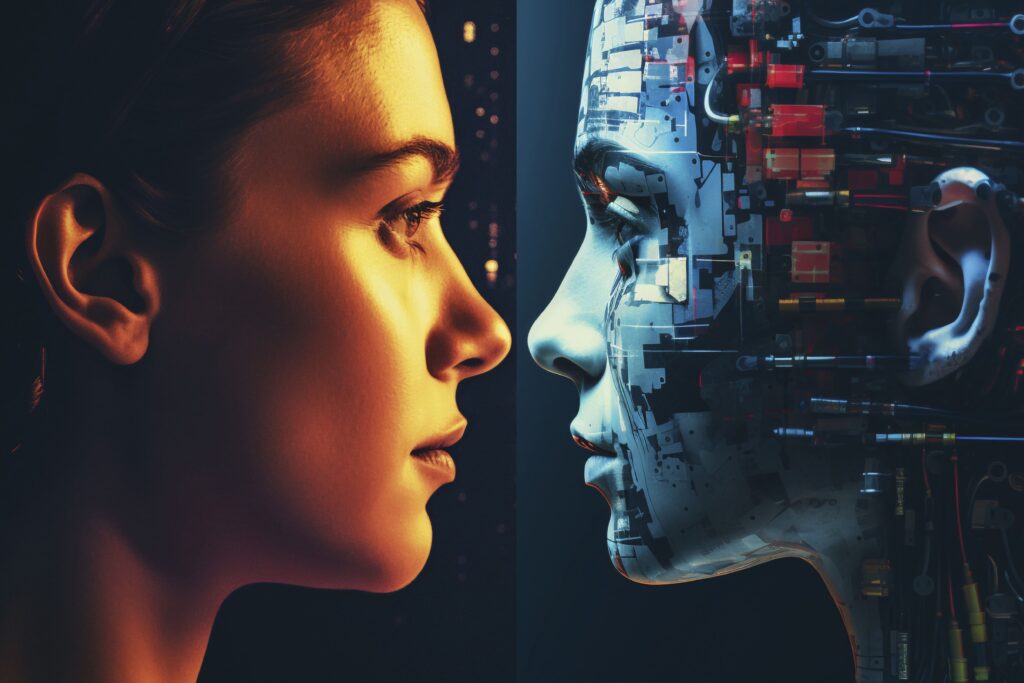
In 2026 , AI Tools vs Humans, the conversation about artificial intelligence is no longer futuristic specultion. It’s practical, immediate, and personal. AI tools are helping people write emails, design logos, diagnose illnesses, analyze financial trends, and even generate code in minutes. For many professionals, these tools have shifted from “interesting experiments” to daily essentials.
At the same time, concerns are growing. Will automation reduce job opportunities? Are uniquely human abilities becoming less valuable? Is creativity still ours alone?
The real story, however, isn’t a battle between machines and people. It’s a deeper exploration of what each does best and how the balance of power is reshaping our workplaces, classrooms, and communities.
Let’s explore the ultimate showdown between AI vs Human Skills in 2026.
The Rapid Growth of AI Tools
AI vs Human Skills in 2026 has moved beyond simple automation. Today’s systems can learn patterns, predict outcomes, generate language, recognize images, and adapt based on feedback. They process enormous amounts of data in seconds and deliver outputs that once required hours of human effort.
Organizations like OpenAI and Google DeepMind have helped accelerate this transformation. Tools such as ChatGPT assist with writing and research, GitHub Copilot supports developers with code suggestions, and Midjourney enables fast visual content creation.
Across industries, AI is being used to:
- Draft reports and marketing materials
- Analyze financial markets
- Optimize supply chains
- Screen job applications
- Personalize education
- Support medical diagnostics
The advantages are clear: speed, efficiency, and scalability. AI tools can handle repetitive tasks tirelessly and consistently. They reduce operational costs and allow teams to focus on higher-level thinking.
But efficiency is only part of the equation.
Where AI Excels
To understand this showdown fairly, we need to recognize where AI truly shines.
1. Speed and Volume
AI systems process massive datasets almost instantly. A task that might take a person several hours such as reviewing thousands of documents can be completed in minutes. For businesses managing large-scale operations, this speed is transformative.
2. Pattern Recognition
AI thrives on identifying patterns in data. From detecting fraud in financial transactions to predicting consumer behavior, its strength lies in analyzing structured information at scale.
3. Consistency
Unlike humans, AI does not experience fatigue, distraction, or emotional bias. In tasks requiring strict consistency such as quality checks or data processing it often performs with remarkable reliability.
4. Accessibility
AI-powered tools are becoming more user-friendly. People without technical backgrounds can now design graphics, write code, or analyze data with minimal training. This democratization of technology opens doors for individuals who previously lacked access to specialized skills.
Yet even with these strengths, AI has clear limitations.
The Enduring Power of Human Skills
While machines are impressive, they are built on algorithms and data. Humans bring something fundamentally different to the table.
1. Emotional Intelligence
People understand nuance, empathy, and context in ways machines cannot truly replicate. Leadership, counseling, caregiving, and team collaboration rely heavily on emotional awareness.
A manager navigating workplace conflict, a teacher supporting a struggling student, or a healthcare worker comforting a patient demonstrates emotional depth that goes beyond pattern recognition.
2. Ethical Judgment
AI systems operate based on programmed instructions and training data. Humans, however, weigh values, cultural norms, and moral implications.
When faced with complex ethical dilemmas such as privacy concerns, hiring fairness, or medical decisions human oversight is essential. Decisions that affect people’s lives require accountability and moral reasoning.
3. Creativity Rooted in Experience
AI can generate content by analyzing existing patterns. Humans create from lived experiences, cultural backgrounds, and personal stories.
A novel, a painting, a business idea, or a social movement often emerges from emotion, intuition, and unique perspective. These elements cannot be fully reduced to data.
4. Adaptability in Uncertainty
AI performs best in structured environments. Humans excel in ambiguity. When circumstances change unexpectedly economic shifts, social crises, new regulations people adjust strategies, interpret subtle cues, and innovate.
Flexibility remains a distinctly human advantage.
The Workplace in 2026: Replacement or Reinvention?
One of the biggest concerns surrounding AI is job displacement. Automation has already transformed manufacturing and logistics. Now, knowledge-based professions are feeling the impact.
However, history shows that technological revolutions tend to reshape jobs rather than eliminate them entirely. New roles emerge while old tasks evolve.
For example:
- Writers use AI for drafting but refine content with their voice and expertise.
- Developers rely on coding assistants to speed up repetitive tasks while focusing on architecture and problem-solving.
- Doctors use diagnostic algorithms as support tools rather than replacements.
- Educators integrate AI-based learning platforms while maintaining mentorship and human connection.
The most resilient professionals are not those who resist AI but those who learn to work alongside it.
Collaboration: The Real Winner
Framing the discussion as “AI vs Human Skills in 2026” oversimplifies reality. In practice, the most effective outcomes arise from collaboration.
AI handles data-heavy and repetitive processes. Humans provide direction, context, and oversight. Together, they produce better results than either could alone.
Consider creative industries. AI can generate multiple design prototypes quickly. A human designer then evaluates which concepts align with brand identity and emotional impact. The final product reflects both efficiency and insight.
In healthcare, AI can detect anomalies in medical scans with high accuracy. A physician interprets those findings within the broader context of the patient’s history and symptoms.
This partnership approach reduces workload while preserving human agency.
Critical Skills for the Future
As AI capabilities expand, certain human skills are becoming more valuable, not less.
Critical Thinking
The ability to analyze information, question assumptions, and evaluate outputs is essential. AI may provide answers, but humans must assess their accuracy and relevance.
Communication
Clear communication written and verbal remains central to collaboration, leadership, and community building.
Emotional Intelligence
Understanding diverse perspectives and fostering inclusive environments strengthens teams and organizations.
Lifelong Learning
Technology evolves rapidly. Adaptability and continuous learning ensure that individuals remain competitive and confident.
Ethical Awareness
As AI systems influence more decisions, professionals must understand their societal impact and advocate for fairness and transparency.
Addressing Inclusion and Fairness
The growth of AI also raises important questions about equity. Algorithms trained on biased data can unintentionally reinforce inequalities. Ensuring fairness requires diverse perspectives in development and oversight.
Inclusive language and thoughtful design matter. Technology should empower people from all backgrounds, not widen gaps in access or opportunity.
Organizations that prioritize diversity in AI development help create tools that reflect broader human experiences. This approach benefits everyone.
The Psychological Impact
Beyond economics and productivity, AI’s rise affects identity and self-worth. Many people derive purpose from their work. If machines can perform similar tasks, it’s natural to feel uncertain.
However, it’s important to recognize that human value is not defined solely by productivity. Creativity, relationships, empathy, and community involvement remain deeply meaningful aspects of life.
Rather than diminishing human significance, AI can free individuals from routine tasks and allow greater focus on strategic thinking and interpersonal connection.
A Balanced Perspective
AI vs Human Skills in 2026: The ultimate showdown is not about declaring a winner. It’s about understanding strengths and limitations.
AI tools excel in:
- Speed
- Data analysis
- Automation
- Scalability
Human skills excel in:
- Empathy
- Ethical reasoning
- Creativity
- Adaptability
When integrated thoughtfully, these strengths complement each other.
The Definitive Judgment
The future does not belong exclusively to machines or to humans resisting change. It belongs to those who embrace collaboration, continuous learning, and ethical responsibility.
AI tools are powerful allies. Human skills remain the guiding force.
In this ultimate showdown, the true victory lies in partnership.
As we move forward, the question shifts from “Will AI replace us?” to “How can we use AI to enhance what makes us uniquely human?”
That shift in perspective may be the most important transformation of all.