

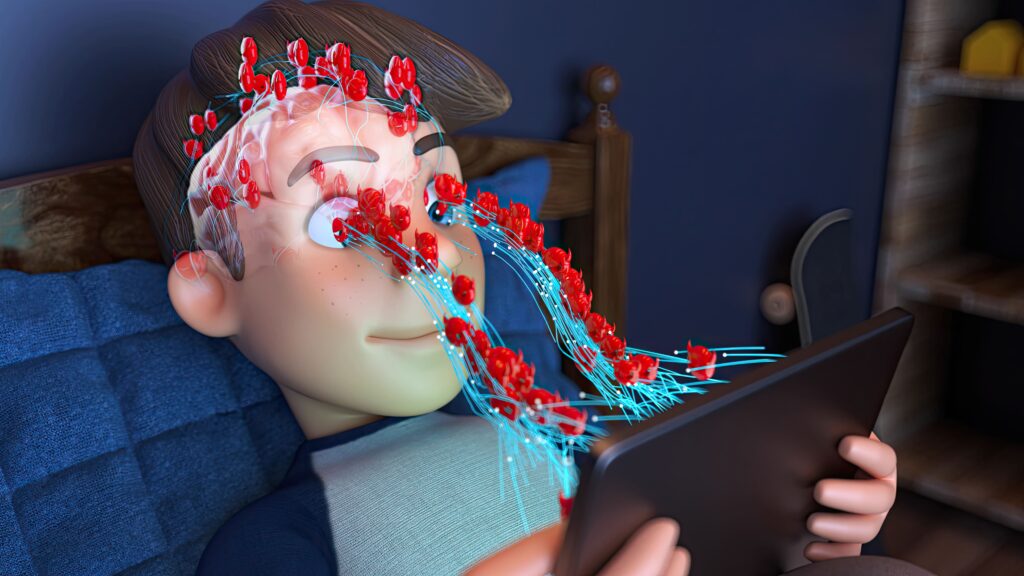
Have you ever opened your phone to check one message and ended up scrolling for half an hour? Or felt a tiny rush when someone likes your post, replies to your text, or when a new package arrives at your door?
If so, you are not weak. You are not lacking discipline. You are human.
At the center of these everyday experiences is dopamine, a powerful chemical messenger in the brain. It is often called the “feel-good hormone,” but that nickname only tells part of the story. Dopamine is not just about pleasure. It is about motivation, anticipation, learning, and survival.
In today’s fast-paced world where notifications, streaming platforms, online shopping, and endless content compete for our attention our dopamine system is constantly being stimulated. Understanding how this works can help us approach our habits with curiosity rather than shame and make choices that support our well-being.
Let’s take a closer look at the science of dopamine, why modern life can feel addictive, and how we can restore balance in a way that feels realistic and compassionate.
What Is Dopamine?
Dopamine is a neurotransmitter, which means it helps brain cells communicate with one another. It plays a role in several essential functions:
- Motivation
- Reward and reinforcement
- Learning and habit formation
- Focus and attention
- Movement
- Mood regulation
Rather than simply producing pleasure, dopamine is more accurately described as the “wanting” chemical. It drives us to seek things out.
When you smell your favorite food, anticipate seeing someone you care about, or work toward a goal, dopamine levels rise before you actually receive the reward. It fuels the pursuit.
Without dopamine, we would struggle to get out of bed, chase dreams, build relationships, or explore new opportunities. It is essential for survival and growth.
The issue is not dopamine itself. The issue is how often and how intensely it gets triggered in modern life.
How the Dopamine Reward Loop Works
To understand our attraction to stimulation, it helps to understand the reward loop:
- Cue or Trigger – You see a notification, think about a snack, or feel bored.
- Anticipation – Dopamine rises as your brain predicts a reward.
- Action – You check the phone, eat the snack, or open the app.
- Reward – You feel temporary satisfaction.
- Drop – Dopamine levels fall, sometimes below baseline.
- Craving – You seek another hit.
This loop is natural. It helped our ancestors survive by reinforcing behaviors like finding food and forming social bonds.
However, today we experience this loop repeatedly throughout the day. Social media, video platforms, games, processed foods, online shopping, and even email notifications are designed to activate anticipation again and again.
When stimulation is constant, the cycle speeds up.
Why Modern Stimulation Feels So Compelling
Many digital platforms use what psychologists call variable rewards. This means the outcome is unpredictable.
- Sometimes your post gets many likes.
- Sometimes it gets few.
- Sometimes a video is highly entertaining.
- Sometimes it is not.
This unpredictability makes the dopamine response stronger. It keeps us checking, scrolling, refreshing.
This does not mean technology is evil. It means it is built around human psychology.
But stimulation does not only come from screens. It can also come from:
- Constant multitasking
- Overworking
- High-sugar or high-fat foods
- Shopping for novelty
- Intense exercise without rest
- Seeking external validation
- Consuming constant news updates
For many people, these behaviors are ways of coping with stress, loneliness, pressure, or uncertainty. They are understandable responses to a demanding world.
Tolerance and the “More” Effect
When dopamine spikes frequently, the brain adapts. It reduces sensitivity to maintain balance. This is called tolerance.
Over time, you may notice:
- Activities that once felt exciting now feel ordinary.
- You need more stimulation to feel the same effect.
- Quiet moments feel uncomfortable.
- Focus becomes harder.
It can start to feel like everyday life is dull unless something exciting is happening.
This does not mean your brain is broken. It means it has adapted to high levels of stimulation.
The encouraging news is that the brain is flexible. It can recalibrate when stimulation decreases.
Dopamine vs. Deep Satisfaction
There is an important difference between short bursts of pleasure and lasting fulfillment.
Dopamine supports excitement and pursuit.
Deeper satisfaction often involves connection, meaning, and calm.
When we constantly chase stimulation, we may feel busy and entertained but still restless underneath. That restless feeling is not a personal flaw. It is a sign that the nervous system rarely gets to settle.
Slower rewards like meaningful conversation, creative expression, time in nature, or quiet reflection activate different pathways in the brain. These experiences may feel subtle at first, especially if we are used to intense stimulation. But over time, they can feel more nourishing.
Signs You May Be Overstimulated
Every person is different. There is no universal standard. However, some gentle signs that stimulation might be outweighing balance include:
- Reaching for your phone automatically without thinking
- Difficulty concentrating on one task
- Feeling bored quickly
- Restlessness during quiet time
- Trouble enjoying slower hobbies
- Needing constant productivity to feel worthy
If you recognize yourself in this list, it is not a reason for self-criticism. It is an opportunity for awareness.
The Truth About “Dopamine Detox”
The idea of a “dopamine detox” has become popular. However, the term can be misleading. You cannot detox from dopamine. Your brain needs it to function.
What people often mean is reducing high-intensity stimulation for a period of time.
Extreme deprivation is rarely sustainable. Instead, small and thoughtful adjustments can be more effective.
The goal is not to remove pleasure. The goal is to create balance so that everyday experiences regain depth and meaning.
Practical Ways to Restore Balance
The following approaches are flexible. They are not strict rules. Choose what feels accessible and supportive for your life circumstances.
1. Practice Single-Tasking
Try focusing on one activity at a time.
- Eat without scrolling.
- Listen fully during conversations.
- Work in focused intervals.
This retrains the brain to tolerate sustained attention.
2. Allow Moments of Boredom
Boredom is not wasted time. It gives the brain space to process and create.
Consider:
- Waiting in line without checking your phone.
- Sitting quietly for a few minutes.
- Taking a short walk without headphones.
At first, this may feel uncomfortable. That discomfort often softens with repetition.
3. Support Sleep
Sleep helps regulate dopamine receptors and overall emotional balance. When sleep is disrupted, impulse control can weaken.
Creating a consistent sleep routine can gently support brain health.
4. Move Your Body Mindfull
Regular movement supports dopamine balance. It does not need to be extreme.
Walking, stretching, strength training, dancing, yoga, or any form of accessible movement can help regulate mood and focus. The key is sustainability rather than intensity.
5. Create Intentional Digital Boundaries
Digital tools are part of modern life. Instead of eliminating them, consider:
- Turning off non-essential notifications.
- Keeping devices out of the bedroom.
- Scheduling specific times for social media.
- Using grayscale mode to reduce visual stimulation.
Small adjustments can reduce automatic engagement.
6. Seek Meaningful Connection
Human connection is a powerful regulator of the nervous system.
Spending time with supportive people, engaging in shared activities, or participating in community spaces can provide satisfaction that does not rely on rapid stimulation.
This is especially important in a time when many people experience isolation despite being constantly connected online.
The Role of Mental Health
Dopamine pathways are involved in conditions such as ADHD, depression, and substance use disorders. If struggles with motivation, impulse control, or mood feel persistent or overwhelming, seeking support from a qualified professional can be helpful.
Mental health experiences vary widely across cultures, communities, and identities. Access to care is not equal everywhere, and that reality matters. If formal therapy is not accessible, support may also come from trusted community members, peer groups, or educational resources.
You deserve support that respects your lived experience.
A Compassionate Perspective
It is easy to turn conversations about dopamine into productivity advice. But human beings are not projects to optimize.
If you notice habits that feel compulsive, try asking yourself:
- What need am I trying to meet?
- Am I tired, stressed, lonely, or overwhelmed?
- What would feel genuinely restorative right now?
Often, stimulation becomes a coping mechanism. Understanding the need beneath the behavior is more powerful than forcing control.
Self-compassion reduces shame, and shame rarely creates lasting change.
Redefining Reward in a High-Speed World
We live in a culture that values speed, novelty, and constant engagement. Slowing down can feel unfamiliar or even uncomfortable.
Yet our nervous systems evolved for rhythm, not constant spikes.
When we gradually reduce overstimulation:
- Focus can improve.
- Creativity can deepen.
- Emotional regulation can stabilize.
- Everyday pleasures can feel richer.
This process is gradual. It is not about perfection. It is about awareness and intention.
Final Thoughts
Dopamine is not the enemy. It is one of the reasons we dream, explore, connect, and grow.
But when stimulation becomes constant, the balance shifts. We may find ourselves chasing the next notification, snack, achievement, or distraction without feeling fully satisfied.
Understanding the science behind dopamine helps us move from self-judgment to self-awareness. It reminds us that many of our habits are shaped by biology interacting with modern design.
You are not broken for finding stimulation compelling. Your brain is doing what it evolved to do.
The invitation is not to eliminate pleasure, but to create space for deeper forms of fulfillment connection, meaning, rest, creativity, and presence.
In a world designed to capture attention, choosing intentional engagement is a powerful act of care. And balance, more than intensity, is what allows us to thrive.