
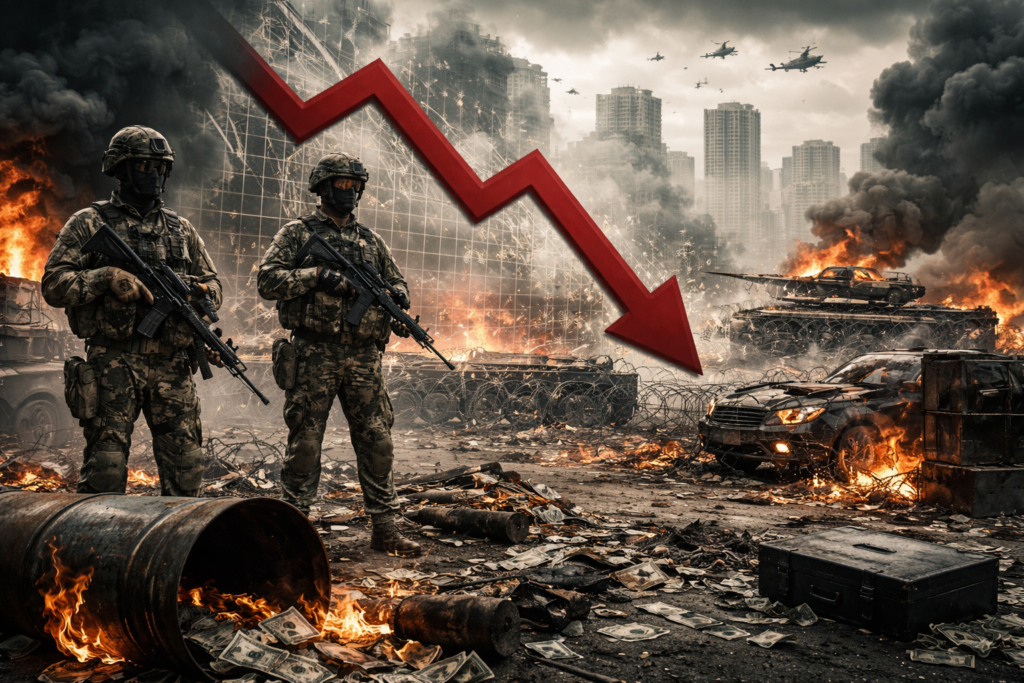
War has always reshaped societies, borders, and political systems, but its economic impact is equally powerful. The economic impact of war can disrupt global markets, increase inflation, damage trade routes, and create uncertainty for businesses and investors. From supply chain interruptions to rising energy prices, conflicts influence economies far beyond the battlefield. Events such as World War II and the recent Russian invasion of Ukraine show how wars can transform financial systems and global trade networks. Understanding how conflicts affect global markets helps policymakers, businesses, and citizens make better economic decisions during periods of uncertainty.
In this blog, we will explore how war affects the global economy, the financial consequences of conflict, and the implications for international trade, stock markets, and economic stability.
Understanding the Economic Impact of War on Global Markets
The economic impact of war on global markets is complex and far-reaching. Conflicts often trigger economic shocks that ripple through multiple sectors, including energy, agriculture, manufacturing, and financial services.
When wars begin, governments often redirect resources toward military spending. This shift can reduce funding for education, healthcare, and infrastructure. While military industries may experience growth, other sectors can face stagnation or decline.
At the same time, wars create uncertainty in financial markets. Investors typically react quickly to geopolitical risks, which can cause stock prices to fall and currency values to fluctuate.
Key Economic Effects of War
Some of the most common economic consequences include:
- Disrupted international trade
- Increased government spending on defense
- Inflation due to supply shortages
- Declines in investor confidence
- Currency volatility in affected regions
Institutions such as the International Monetary Fund and the World Bank often monitor these trends and publish reports on how conflicts influence global economic stability.
For readers interested in financial trends, you can also explore our internal guide: Is 2026 the Right Time to Invest in the Indian Stock Market?
How War Disrupts Global Trade and Supply Chains
One of the most immediate effects of war is disruption to international trade and global supply chains. Many countries depend on imports for essential goods such as energy, food, and raw materials. When conflicts interrupt these flows, prices rise and shortages occur.
For example, the conflict linked to the Russian invasion of Ukraine disrupted global wheat and energy supplies because both countries are major exporters. Shipping routes became unsafe, and sanctions restricted trade with Russia.
Supply Chain Breakdown During Conflict
Wars often cause supply chain breakdowns through:
- Damaged infrastructure like ports and railways
- Blocked shipping routes and trade corridors
- International sanctions and trade restrictions
- Labor shortages in affected regions
According to the World Trade Organization, conflicts can reduce global trade growth significantly, especially when major exporters or transit countries are involved.
For additional insights, you can read this external resource from the International Monetary Fund about global economic stability during conflicts:
https://www.imf.org
The Impact of War on Energy and Commodity Prices
Another major dimension of the economic impact of war is the effect on energy markets and commodity prices. Many conflicts occur in regions rich in oil, gas, or other natural resources. When production or transportation is disrupted, prices often surge.
For instance, during geopolitical tensions in oil-producing regions, the price of crude oil can increase rapidly. These price spikes affect transportation costs, manufacturing expenses, and household energy bills worldwide.
Rising Energy Costs During Conflict
War can influence energy prices through several mechanisms:
- Damage to oil and gas infrastructure
- Reduced production from conflict zones
- International sanctions affecting energy exports
- Market speculation and investor uncertainty
Organizations like the International Energy Agency closely track these changes and provide data on how geopolitical conflicts impact global energy markets.
Higher energy prices also contribute to inflation, which reduces purchasing power for consumers and slows economic growth in many countries.
Financial Markets and Investor Reactions to War
Global financial markets are highly sensitive to geopolitical events. When conflicts escalate, investors often move their money into safer assets such as gold, government bonds, or stable currencies.
Stock markets typically experience volatility during wartime because businesses face uncertainty about supply chains, consumer demand, and regulatory changes.
Market Volatility and Economic Uncertainty
Some common financial market reactions to war include:
- Stock market declines in affected regions
- Increased demand for safe-haven assets
- Currency depreciation in conflict zones
- Reduced foreign investment
For example, during the early stages of the Russian invasion of Ukraine, global markets experienced sharp fluctuations as investors responded to sanctions, energy disruptions, and geopolitical tensions.
If you want to learn more about investing during uncertain economic periods, check our internal article: Boost Your Exam Scores: Smart Study Habits for Students (example internal link structure for educational blog networks).
Government Spending and the Cost of War
Wars are extremely expensive for governments. Military operations require massive funding for weapons, logistics, personnel, and technology. As a result, government budgets often shift dramatically during wartime.
Countries may increase taxes, borrow money, or reallocate funds from social programs to finance military efforts.
Economic Burden on Governments
The financial cost of war can include:
- Increased national debt
- Higher taxes or reduced public spending
- Reconstruction costs after conflict
- Long-term support for veterans and affected populations
For instance, economic historians often study the enormous costs associated with conflicts such as World War II, which required unprecedented levels of government spending and international cooperation for reconstruction.
The Human and Social Economic Consequences
Beyond financial markets and trade statistics, the economic impact of war deeply affects communities and individuals. Wars can destroy infrastructure, disrupt education, and displace millions of people.
The humanitarian consequences of conflict often create long-term economic challenges for both affected countries and neighboring regions.
Social and Economic Effects on Communities
Some of the major human-related economic consequences include:
- Job losses due to destroyed industries
- Refugee crises affecting regional economies
- Reduced access to education and healthcare
- Long-term poverty in conflict zones
Organizations such as the United Nations and the International Committee of the Red Cross work to support communities affected by these crises and promote recovery efforts.
Post-War Recovery and Economic Rebuilding
Although wars cause severe economic damage, many countries eventually rebuild and recover. Reconstruction efforts often involve international cooperation, foreign investment, and economic reforms.
Post-war recovery can create opportunities for infrastructure development, innovation, and institutional reform.
Strategies for Economic Recovery After War
Key recovery strategies include:
- International financial assistance
- Infrastructure rebuilding projects
- Trade agreements and economic partnerships
- Support for displaced populations
The reconstruction of Europe after World War II demonstrates how coordinated international efforts can help restore economic stability and growth.
Conclusion: Why Understanding the Economic Impact of War Matters
The economic impact of war on global markets extends far beyond the battlefield. Conflicts disrupt trade, increase energy prices, destabilize financial markets, and place heavy financial burdens on governments. At the same time, wars create humanitarian crises that can affect economic development for decades.
By understanding how conflicts influence the global economy, policymakers, businesses, and individuals can better prepare for uncertainty and support strategies that promote stability and peace.
While the world continues to face geopolitical challenges, economic cooperation and diplomacy remain essential tools for reducing the financial and human costs of war.