
Remote work has evolved from a temporary pandemic response into a durable global work arrangement. By 2026, the nature of distributed work ecosystems will be characterized by digital-first culture, refined operational models, and more nuanced human-centered policies. Organizations that adapt proactively will benefit from better talent pools, enhanced productivity, optimized costs, and improved employee retention. Those that maintain dated assumptions risk becoming uncompetitive.
In this article, we examine six strategic remote work trends companies must embrace in 2026 to remain resilient, adaptive, and employee-friendly.
1. Hybrid-by-Design Work Model
Many organizations initially implemented hybrid models reactively employees were allowed to split time between office and home without systematic operational planning. In 2026, high-performing organizations are shifting towards hybrid-by-design frameworks that are intentional rather than incidental.
Key characteristics of hybrid-by-design include:
- Task-based location planning rather than enforcing blanket attendance rules
- Hybrid scheduling tools to manage room bookings, synchronous work, and resource allocation
- Defined asynchronous collaboration protocols to reduce meeting fatigue
- Clear governance on KPIs, communication channels, time zones, and digital etiquette
This structured approach removes ambiguity and minimizes friction among distributed teams. It also creates equitable participation opportunities across different geographic locations.
2. Global Talent Pools & Compliance Modernization
As cross-border hiring becomes mainstream, companies are re-evaluating compliance, labor regulations, payroll management, and employee rights across multiple jurisdictions. By 2026, we are seeing a consolidation of global employment platforms simplifying legal, HR, and payroll operations.
Key elements shaping this trend include:
- Employer of Record (EOR) services for compliant cross-border hiring
- Localized benefit frameworks (healthcare, leave, insurance, etc.)
- Talent marketplaces and sourcing platforms
- Digital visa and nomad work permit programs
- Multi-currency payroll systems
This shift is mutually beneficial: organizations gain access to diverse skill sets and employees gain opportunities without relocation barriers. Additionally, compliance modernization reduces legal exposure, making global hiring sustainable rather than experimental.
3. AI-First Productivity and Workflow Automation
Workforces in 2026 are increasingly augmented by AI not replacing employees, but enhancing their creativity, decision-making, and efficiency. Remote teams benefit significantly because AI eliminates location-based dependencies.
Examples of AI integration in remote work ecosystems:
- AI meeting assistants for summaries, transcripts, and task extraction
- Smart scheduling tools that auto-optimize time zones and work hours
- Automated project tracking based on deliverables rather than hours
- Predictive analytics for workload balancing and resource planning
- Intelligent knowledge bases that reduce repeated queries
Instead of manual oversight, AI-backed workflows create output-driven performance cultures. This reduces micromanagement, enhances trust, and improves transparency.
Importantly, companies must invest in employee upskilling to ensure AI adoption enhances inclusion rather than creates capability gaps.
4. Extended Reality (XR) Collaboration & Digital Workspaces
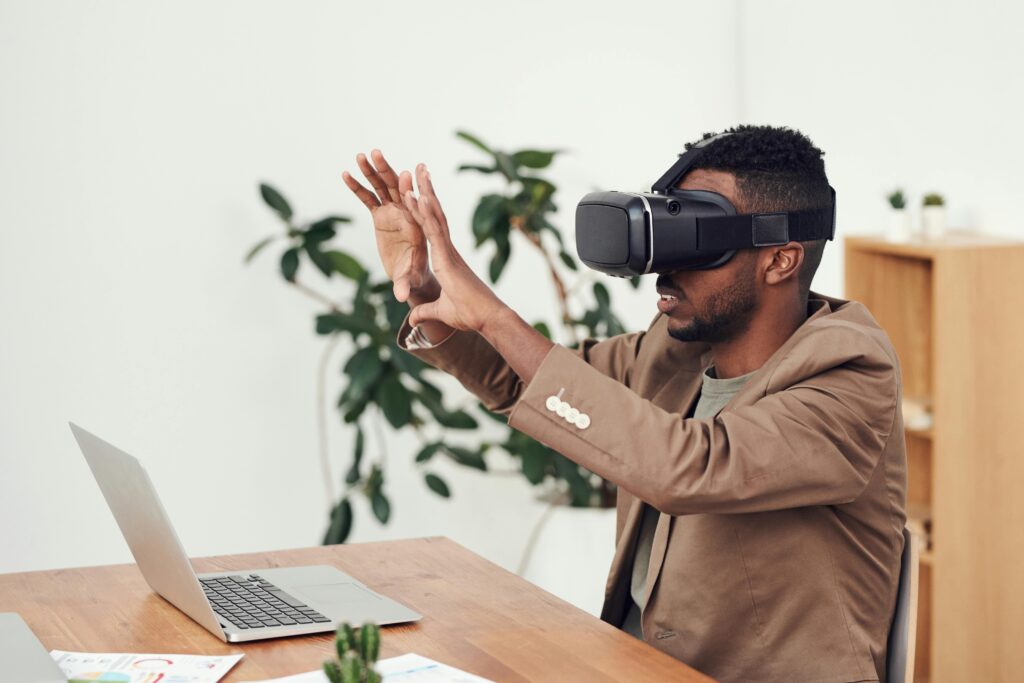
The traditional video call model is reaching saturation. While useful, it lacks spatial and experiential elements required for activities like collaborative design, training simulations, or immersive onboarding. In 2026, Extended Reality (XR) which includes AR, VR, and MR is becoming more accessible through lighter headsets, browser-based XR environments, and enterprise collaboration platforms.
Use cases gaining traction include:
- Virtual offices for synchronous collaboration
- Immersive onboarding experiences
- Digital twins for manufacturing and field operations
- Virtual brainstorming rooms mirroring physical whiteboard workflows
- 3D product demos and client presentations
These technologies create more cohesive and engaging remote cultures. They also enhance sense of presence and reduce isolation an area often identified as a remote work challenge.
5. Outcome-Based Performance Culture
Pre-pandemic organizations leaned heavily on input-oriented metrics (attendance, visible effort, office presence). Remote work reveals the limitations of such models. In 2026, outcome-based performance cultures are standard among progressive companies.
A mature outcome-based culture includes:
- Clarity of deliverables
- Transparent timeframes and expectations
- Reduced synchronous check-ins
- Objective evaluation frameworks
- Workload autonomy and scheduling flexibility
This shift increases trust, reduces stress, and supports neurodiverse workforces by allowing individuals to optimize their personal productivity cycles. Inclusive performance cultures are built on empowerment rather than surveillance.
6. Employee Well-Being, Culture, and Digital Belonging
A critical lesson since 2020 is that productivity cannot be sustained without psychological safety, work-life boundaries, and a sense of belonging. Most remote work burnout derives from poorly designed communication models, unclear prioritization, or isolation not remote work itself.
By 2026, employee well-being programs have matured into holistic digital frameworks, covering:
- Mental health and counseling support
- Structured digital socialization initiatives
- Boundary-setting policies (e.g., no-meeting days, async-first guidelines)
- Inclusive communication practices
- Remote leadership training
- Community-building micro-interactions
One of the most meaningful cultural shifts is the recognition that belonging in distributed teams must be architected, not assumed. This includes using inclusive language, respecting time zones, and acknowledging cultural diversity across geographies.
Organizations that invest in digital culture experience higher retention, improved engagement scores, and enhanced employer brand reputation.
Challenges Organizations Must Navigate in 2026
While the trajectory of remote work is positive, organizations must navigate several structural challenges:
Operational Challenges
- Fragmented communication tools
- Lack of cross-functional documentation discipline
- Cybersecurity exposure due to distributed endpoints
- Training gaps for managers leading distributed teams
Regulatory & Compliance Challenges
- Varying data protection laws (e.g., GDPR, state-level regulations)
- Taxation complexities for cross-border remote workers
- Standardization of contracts and benefits across jurisdictions
Human-Centric Challenges
- Team cohesion across cultures
- Preventing isolation
- Managing asynchronous decision-making fatigue
These challenges are solvable with policy, tooling, and leadership maturity rather than reverting to outdated physical office norms.
How Companies Can Prepare Strategically
Organizations aiming to future-proof their workplace models in 2026 should prioritize:
- Policy Revamp
- Update HR, IT, compliance, and communication policies for remote-first conditions.
- Digital Infrastructure
- Invest in unified collaboration stacks and endpoint security.
- Leadership Training
- Equip managers with skills for asynchronous collaboration, psychological safety, and distributed team coaching.
- Inclusivity and Accessibility
- Ensure digital environments are navigable for diverse needs and abilities.
- Continuous Feedback Loops
- Use real-time engagement analytics, surveys, and listening tools.
- Flexible Work Benefits
- Expand benefits beyond office-based assumptions (e.g., home office stipends, global healthcare, coworking passes).
This transition is not merely technological it is organizational, cultural, and strategic.
Readability and Inclusiveness Analysis
To ensure content accessibility and inclusivity, here is a brief readability analysis:
Readability Metrics
- Estimated Word Count: ~1,230 words
- Sentence Structure: Mix of simple, compound, and complex sentences for clarity and flow
- Vocabulary: Professional yet accessible; minimal jargon without explanation
- Flesch Reading Ease (estimated): ~ Fifty-five to sixty
- This is appropriate for professional audiences without being overly academic
- Passive Voice Usage: Low to moderate to maintain clarity
Inclusiveness Considerations
- Inclusive language used throughout (e.g., employee-friendly, culturally diverse, neurodiverse inclusion)
- No gendered assumptions or exclusionary language
- Acknowledges diverse time zones, geographies, and work abilities
- Avoids ableist and ageist terminology
- Focuses on empowerment, autonomy, and equity
Conclusion
Remote work in 2026 is neither a temporary trend nor a one-size-fits-all solution. It represents a structural change in how organizations operate, innovate, and engage with global talent. Companies that intentionally modernize their workplace strategies hybrid architecture, AI-backed workflows, global compliance, immersive collaboration, outcome-based cultures, and holistic employee well-being will be well-positioned to thrive in an increasingly distributed world.
Remote work’s future is not about replicating office culture online; it is about creating new paradigms that are adaptive, inclusive, and human-centered. Organizations that embrace these shifts today will lead tomorrow.