
Have you ever reached the end of the month and wondered where your money went? Between groceries, bills, subscriptions, transportation, and unexpected expenses, it can be surprisingly difficult to keep money aside. If you are wondering how to save money in 2026, you do not necessarily need to make extreme lifestyle changes. A few practical adjustments can make saving more manageable.
Saving money is not about avoiding every purchase you enjoy. It is about understanding where your money goes, making thoughtful spending decisions, and creating habits that support your financial goals.
Whether you want to build an emergency fund, reduce unnecessary expenses, or simply have more money left at the end of the month, these 15 practical strategies can help you get started.
1. How to Save Money in 2026 With a Realistic Budget
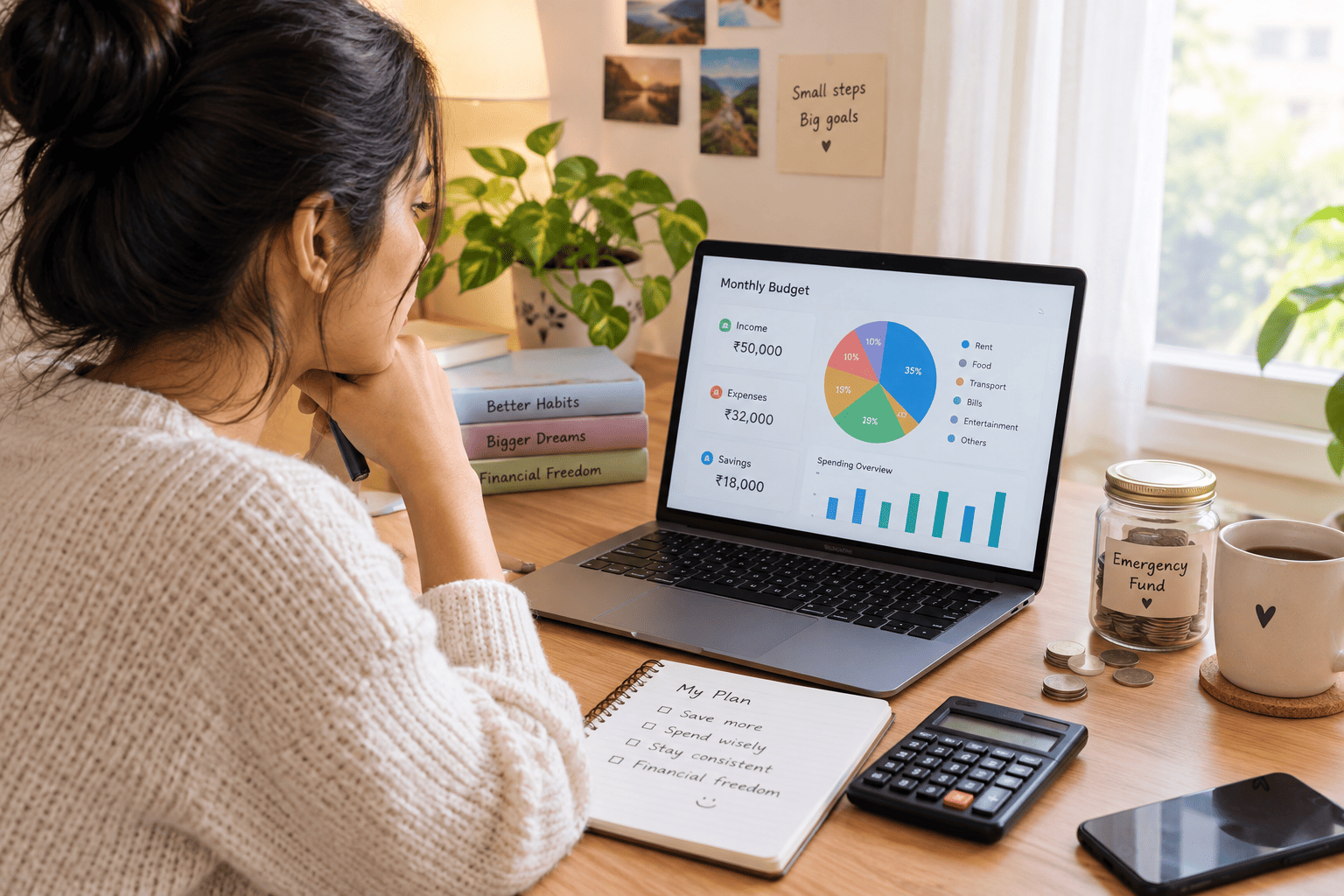
A budget gives your money a clear direction. It helps you see how much you earn, what you spend, and how much you can realistically save.
Start by listing your monthly income and regular expenses. Include housing, utilities, groceries, transportation, insurance, debt payments, subscriptions, and other essentials.
Next, look at flexible spending such as dining out, entertainment, shopping, and hobbies.
Your budget does not need to be extremely strict. In fact, a budget that leaves room for occasional enjoyment is often easier to maintain. Consumer.gov’s budgeting guide provides useful information for anyone creating a budget for the first time.
The goal is to create a plan that works with your actual lifestyle rather than one that looks perfect on paper.
2. Track Your Spending to Find Money-Saving Opportunities
Before cutting expenses, find out where your money is actually going.
For 30 days, record every purchase. You can use a spreadsheet, notes app, budgeting application, or simple notebook.
At the end of the month, review your spending categories.
You might discover that food delivery costs more than expected, several small online purchases have added up, or you are paying for subscriptions you rarely use.
Tracking your spending is not about judging your financial choices. It gives you information that can help you make better decisions.
3. Set Specific Savings Goals
Saving becomes easier when you have a reason to save.
Instead of saying, “I want to save more,” choose a specific goal.
For example, you could decide to:
- Build a $1,000 emergency fund.
- Save for a vacation.
- Prepare for a large upcoming expense.
- Pay for an education course.
- Build a down payment.
- Increase retirement savings.
- Create a fund for unexpected repairs.
Once you choose a goal, divide it into smaller targets.
A $1,200 goal may feel difficult at first, but saving $100 per month makes it much easier to understand and track.
4. How to Save Money in 2026 by Automating Your Savings
One of the easiest ways to make saving consistent is to automate it.
Set up an automatic transfer from your everyday account to your savings account after receiving your income. Even a small recurring contribution can help you build the habit.
The Consumer Financial Protection Bureau discusses automatic transfers as one way to make saving more consistent.
Think of automated saving as paying your future self first.
If the money moves into savings before you have a chance to spend it, you are less likely to accidentally use it for everyday purchases.
5. Build an Emergency Fund for Financial Security
Unexpected expenses are part of life.
Your car may need repairs, an appliance might stop working, or you could face an unexpected bill. A temporary reduction in income can also put pressure on your finances.
Without savings, these situations may force you to depend on credit cards or loans.
An emergency fund provides a financial cushion when something unexpected happens. You do not need to build a large fund immediately. Start with an amount that fits your current circumstances and add to it regularly.
The CFPB’s emergency savings guide explains how even small amounts of emergency savings can provide useful financial protection.
6. Save Money in 2026 by Reviewing Your Subscriptions
Subscriptions can be convenient, but recurring payments are easy to overlook.
Check your bank and card statements and make a list of every subscription you currently pay for.
Ask yourself:
- Do I still use this service?
- How often do I use it?
- Do I have another service that provides something similar?
- Can I switch to a cheaper plan?
- Did I forget to cancel a free trial?
You may be surprised by how much money goes toward services you rarely use.
Canceling just a few unnecessary subscriptions can create extra room in your monthly budget.
7. Use the 24-Hour Rule for Impulse Purchases
Online shopping makes it easy to buy something within seconds.
When you find something you want but did not plan to purchase, wait 24 hours before buying it.
After a day, ask yourself whether you still want or need the item.
For expensive purchases, consider waiting even longer.
This simple habit can help you avoid spending money during a temporary moment of excitement.
You do not have to avoid every non-essential purchase. The goal is to make sure your spending reflects what you actually value.
8. How to Save Money in 2026 on Food Expenses
Food is another area where small changes can make a difference.
You do not need to stop eating at restaurants completely. Instead, try replacing a few restaurant or delivery meals each week with meals prepared at home.
Plan your meals before shopping and create a grocery list. Choose ingredients that can be used in several different dishes, and try to use leftovers instead of allowing food to go to waste.
For example, leftover roasted vegetables can become part of a wrap, sandwich, or rice bowl the following day.
The goal is not to make every meal as cheap as possible. It is to reduce unnecessary spending while still enjoying the food you like.
9. Think Twice Before Buying a “Deal”
A discount can make a purchase feel like a saving, but buying something you do not need is still spending.
Before purchasing an item because it is on sale, ask yourself whether you would have bought it without the discount.
This is particularly useful when dealing with free-shipping offers, bulk discounts, and limited-time promotions.
The term “spaving” describes spending more in an attempt to save more. NerdWallet explains how promotions and discounts can sometimes encourage consumers to spend beyond their original plans. You can learn more in its guide to spaving.
A good rule is simple: do not buy something just because the price is lower.
10. Reduce High-Interest Debt
Learning how to manage debt is an important part of improving your finances.
High-interest debt can make saving difficult because a significant portion of your payment may go toward interest.
Start by reviewing your outstanding balances, interest rates, minimum payments, and due dates. Then create a realistic repayment strategy.
As expensive debt decreases, you may eventually have more money available for savings and other financial goals.
Avoid taking on additional debt simply to maintain a savings target. Your overall financial situation matters more than one number in your bank account.
11. Give Unexpected Income a Purpose
Extra money can disappear quickly when you do not have a plan for it.
This could include a bonus, tax refund, cash gift, freelance payment, rebate, or side-income payment.
Before spending unexpected money, decide what you want it to accomplish.
You might divide it between savings, debt repayment, and something enjoyable.
For example, if you receive an unexpected $500, you could save $250, put $150 toward debt, and use $100 for yourself.
There is no universal formula. Choose an approach that makes sense for your financial situation.
12. Increase Your Income Alongside Your Savings
Cutting expenses is useful, but there is a limit to how much you can reduce.
Increasing your income can give you another way to improve your finances.
Depending on your skills and available time, you might consider freelancing, tutoring, selling unused items, part-time work, online services, or learning a new skill that could lead to better opportunities.
If your income increases, avoid automatically increasing your spending by the same amount.
Directing part of your additional income toward savings can help you reach your financial goals faster.
13. Keep Your Savings Separate From Everyday Money
When savings and spending money are kept together, it can be tempting to use your savings for everyday purchases.
Consider keeping money for different purposes in separate accounts or savings categories.
For example, you could have one account for regular expenses and another for emergency savings.
Some financial institutions also offer goal-based savings features that allow you to organize money for different purposes.
Choose a system that makes your savings easy to monitor without making it too easy to spend.
14. Review Your Budget and Saving Strategy Regularly
Your financial situation can change throughout the year.
Your income might increase or decrease. Your bills may change, or you might take on new financial responsibilities.
That is why your budget should not be treated as something you create once and never touch again.
Review your income and expenses every few months. Look at what worked, what did not, and where you can make adjustments.
NerdWallet’s budgeting guide also explains that there is no single budgeting method that works for everyone.
The best approach is the one you can realistically follow.
15. Make Saving Money in 2026 a Long-Term Habit
The biggest mistake with saving is treating it as a short-term challenge.
You might save aggressively for one month and then give up because the plan was too restrictive.
A better approach is to build a habit that fits your life.
If you can only save $20 or $50 per month right now, start there. As your income increases or your expenses decrease, you can gradually increase your savings.
Consistency is more important than making one large deposit and then stopping.
How Much Should You Save in 2026?
There is no universal savings amount that works for everyone.
Your ideal savings rate depends on your income, expenses, debt, financial responsibilities, and goals.
Someone with a higher income may be able to save a larger percentage, while someone dealing with high living costs may have less room in their budget.
Instead of comparing yourself with other people, focus on your own progress.
For example:
- $25 per week = $1,300 per year
- $50 per week = $2,600 per year
- $100 per week = $5,200 per year
These examples do not include interest or investment returns. They simply demonstrate how regular contributions can add up.
If these amounts are too high for your current situation, start smaller. A sustainable $10 weekly contribution is better than an unrealistic target that you abandon.
A Simple Money-Saving Plan for 2026
If you want to put these strategies into practice, start with a simple four-week plan.
Week 1: Track every expense and identify your biggest spending categories.
Week 2: Review subscriptions, recurring bills, and unnecessary expenses.
Week 3: Choose one savings goal and decide how much you can contribute regularly.
Week 4: Set up an automatic savings transfer and review your progress.
After the first month, continue checking your progress and make small adjustments when necessary.
As your savings grow, you can move toward larger goals such as building an emergency fund, paying down debt, or investing for long-term financial objectives.
Final Thoughts on How to Save Money in 2026
Understanding how to save money in 2026 does not require a perfect budget or a complete lifestyle change. It starts with knowing where your money goes and making decisions that fit your circumstances.
Create a realistic budget, track your spending, automate savings, review recurring expenses, and work toward specific financial goals. If possible, look for ways to increase your income while keeping your lifestyle expenses under control.
Most importantly, give yourself time.
Financial progress rarely happens overnight. Small decisions repeated consistently can lead to stronger savings habits and greater financial stability.
If you want to learn more about budgeting and saving, explore reliable resources from Consumer.gov, the Consumer Financial Protection Bureau, and NerdWallet.
The best answer to how to save money in 2026 will look different for every person. Start with what is realistic for you, stay consistent, and adjust your strategy as your financial situation changes.