Learning how to manage money in 2026 can make everyday financial decisions much easier. With changing prices, online shopping, subscriptions, bills, and unexpected expenses, it is important to know where your money goes. You do not need complicated financial knowledge to improve your finances. Simple habits like budgeting, saving regularly, controlling unnecessary spending, and setting financial goals can help you build better money habits.
Whether you are a student, a working professional, or simply trying to improve your finances, these 10 personal finance tips can help you manage money in 2026 more effectively.
1. Understand How to Manage Money in 2026
Before changing your spending habits, first understand how you currently use your money.
For one month, write down your income and expenses. Include regular costs such as:
- Groceries
- Electricity and other bills
- Transportation
- Shopping
- Subscriptions
- Eating out
- Entertainment
- Other daily expenses
Small purchases can easily add up during the month. Once you know where your money is going, you can identify areas where you may be able to reduce spending.
A notebook, spreadsheet, or budgeting app can be enough to start tracking your expenses.
2. Manage Money in 2026 With a Monthly Budget
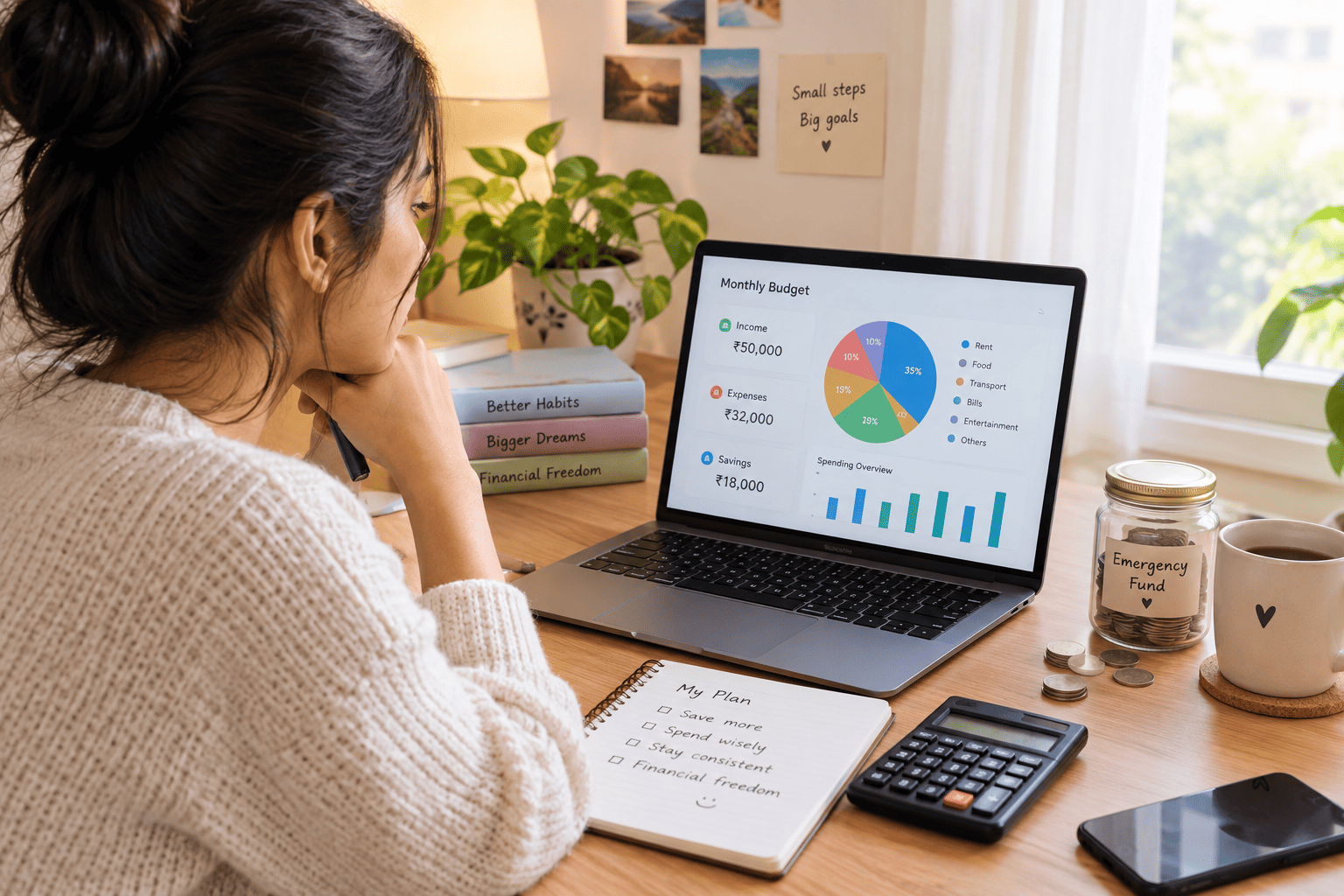
Creating a monthly budget is one of the simplest ways to manage money in 2026.
Start by writing down your total monthly income. Then divide your money between essential expenses, savings, debt payments, and personal spending.
Your budget could include:
- Household expenses
- Food and groceries
- Transportation
- Bills
- Savings
- Debt payments
- Personal spending
Do not worry if your first budget is not perfect. The purpose of a budget is to give your money a plan.
At the end of every month, check your actual spending and make changes where necessary.
3. Money Saving Tips to Manage Money in 2026
One common mistake is waiting until the end of the month to save money. By then, most of the income may already be spent.
Instead, decide how much you want to save when you receive your income.
For example, if you earn ₹20,000 per month, you might start by saving ₹2,000. If that is not possible, even ₹500 or ₹1,000 is a useful starting point.
The important thing is to make saving a regular habit.
You can create separate goals for different purposes, such as education, travel, a new phone, or emergency expenses.
4. Manage Money in 2026 With an Emergency Fund
Unexpected expenses can affect anyone. A medical bill, urgent repair, temporary income loss, or family expense can put pressure on your monthly budget.
An emergency fund gives you money that can be used when something unexpected happens.
If you are starting from zero, begin with a small target such as ₹5,000 or ₹10,000. Once you reach that amount, continue building your savings gradually.
Try to keep emergency savings separate from your everyday spending money. This can make it easier to avoid using it for unnecessary purchases.
5. Control Unnecessary Spending
You do not have to stop spending money on things you enjoy. The goal is to become more aware of unnecessary purchases.
Before buying something that is not essential, ask yourself:
- Do I really need it?
- Is it already included in my budget?
- Can I find it for a lower price?
- Will I still want it after a few days?
Waiting 24 hours before making a non-essential purchase can sometimes help you avoid impulse buying.
Even small reductions in unnecessary spending can make your monthly budget easier to manage.
6. Review Your Subscriptions
Subscriptions can quietly increase your monthly expenses.
Check your bank or payment history and make a list of the services you currently pay for. These could include streaming platforms, mobile apps, memberships, cloud storage, or other online services.
If you are paying for something you rarely use, consider cancelling it.
Reviewing your subscriptions every few months is a simple habit that can help you save money without making major lifestyle changes.
7. Manage Money in 2026 by Paying Bills on Time
Paying bills on time is another important part of good money management.
Make a list of your regular bills and their due dates. You can use your phone calendar to set reminders.
If you use automatic payments, check that enough money is available in your account before the payment date.
Keeping your bills organised also makes it easier to understand how much money is available for savings and other expenses.
8. Be Careful With Credit and Debt
Credit cards and loans can be useful, but they should be used carefully.
Before taking a loan or making a large purchase on credit, understand the interest rate, fees, repayment period, and total repayment amount.
If you already have debt, write down your outstanding balances and repayment dates. Then create a realistic repayment plan.
Avoid taking new debt for unnecessary purchases whenever possible.
For general information about banking and financial awareness in India, you can visit the Reserve Bank of India.
9. Set Clear Financial Goals
Saving money becomes easier when you have a clear reason for saving.
Instead of saying, “I want to save more,” create a specific target.
For example:
- Save ₹20,000 for a laptop.
- Build an emergency fund of ₹30,000.
- Save ₹10,000 for an educational course.
- Pay off a specific debt.
- Build regular long-term savings.
Write down the target amount and the date you want to reach it.
Breaking a large goal into smaller monthly targets can make it easier to stay motivated.
10. Learn More About Personal Finance
Financial habits can improve as you learn more.
Start with basic topics such as:
- Budgeting
- Saving
- Emergency funds
- Debt management
- Insurance
- Taxes
- Investing
- Financial planning
You do not need to learn everything at once. Choose one topic and gradually build your knowledge.
You can also read other finance-related articles on QaskMe to learn more about budgeting, saving, and personal finance.
Simple Habits to Help You Manage Money in 2026
You do not need to completely change your lifestyle. Start with a few simple habits:
- Track your expenses every month.
- Create a realistic budget.
- Save regularly.
- Keep emergency savings separate.
- Avoid unnecessary impulse purchases.
- Review subscriptions regularly.
- Pay bills on time.
- Be careful when using credit.
- Set specific financial goals.
- Keep learning about personal finance.
These small habits can make it easier to manage money in 2026 and stay aware of your financial situation.
Final Thoughts
Knowing how to manage money in 2026 does not require complicated financial strategies. A simple budget, regular savings, controlled spending, and clear goals can help you develop better financial habits.
Start with one small change today. Track your spending, set a savings target, or review your monthly subscriptions. As these habits become part of your routine, managing your finances can become much easier.
The goal is not to stop spending money completely. It is to understand where your money goes and make better decisions about how you use it.