
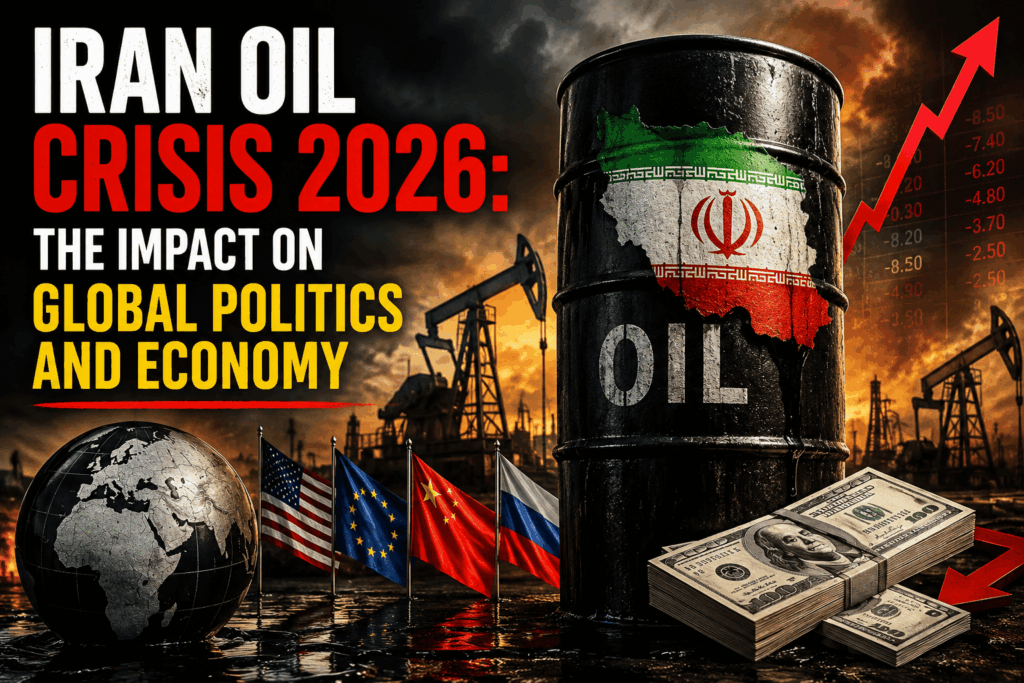
The Iran Oil Crisis 2026 has rapidly become one of the most significant global events shaping international politics and the world economy. From rising fuel prices to geopolitical tensions, the crisis is influencing everything from household expenses to global diplomacy. Understanding the impact on global politics and the economy is essential, especially as oil remains the backbone of modern industrial systems and global trade networks.
Understanding the Roots of the Iran Oil Crisis
The Iran Oil Crisis did not emerge overnight. It is the result of long-standing geopolitical tensions in the Middle East, involving countries like Iran, the United States, Israel, and key Gulf nations. The escalation of conflicts in 2026 led to disruptions in oil production and transportation routes, particularly around the Strait of Hormuz, one of the most strategically important chokepoints in the world.
Nearly one-fifth of the world’s oil supply passes through this narrow waterway. Any instability in this region creates immediate ripple effects across global markets. According to data from the
According to the International Energy Agency (IEA), even minor disruptions in supply can significantly impact oil prices due to the tight balance between demand and availability.
Oil Prices Surge: A Global Chain Reaction
One of the most visible outcomes of the Iran Oil Crisis 2026 is the dramatic rise in oil prices. As supply tightens, markets react quickly, pushing prices upward.
Key consequences include:
- Increased petrol and diesel prices worldwide
- Higher transportation and logistics costs
- Rising manufacturing expenses
This surge affects not just energy sectors but nearly every industry. For example, food prices increase because transporting goods becomes more expensive. Airlines face higher fuel costs, leading to expensive air travel tickets. Even small businesses feel the pressure as operational costs rise.
Reports from
Reuters Energy News
highlight that global oil prices have seen sharp fluctuations, making it difficult for governments and companies to plan long-term strategies.
Inflation and Economic Slowdown
The connection between oil prices and inflation is direct and powerful. As energy costs rise, the price of goods and services increases across the board.
How inflation spreads:
- Fuel price hikes → increased transport cost
- Transport cost → higher product prices
- Higher prices → reduced consumer spending
Central banks are now under pressure to control inflation. Institutions such as the
World Bank
have warned that prolonged energy shocks could slow down global economic growth.
In many countries, especially developing economies, inflation is already a major concern. The Iran Oil Crisis adds another layer of difficulty, making economic recovery more challenging.
Political Tensions and Strategic Alliances
The Iran Oil Crisis 2026 is not just an economic issue it is a geopolitical turning point.
Key political developments:
- Increased military presence in the Middle East
- Rising tensions between global superpowers
- Formation of new alliances and partnerships
Countries are now prioritizing energy security as part of their foreign policy. Oil has become a strategic asset, influencing diplomatic decisions and international relations.
Organizations like
OPEC (Organization of the Petroleum Exporting Countries)
are playing a crucial role in stabilizing markets, but even they face challenges due to unpredictable geopolitical conditions.
Impact on Emerging Economies
Emerging economies, including India, are among the most affected by the Iran Oil Crisis. These countries rely heavily on imported oil to meet their energy needs.
🇮🇳 India’s Challenges:
- Increased import bills
- Pressure on currency value
- Rising cost of living
For ordinary citizens, the impact is clear:
- Expensive fuel
- Higher grocery prices
- Increased utility bills
Governments are trying to manage the situation through subsidies and policy changes, but these are often temporary solutions.
Supply Chain Disruptions and Trade Challenges
Global trade depends heavily on stable energy supplies. The Iran Oil Crisis has disrupted supply chains, causing delays and increased costs.
Major impacts:
- Shipping delays due to higher fuel costs
- Increased freight charges
- Disruptions in global manufacturing networks
Countries that depend on exports are facing reduced competitiveness because of rising production costs. This affects global trade balance and economic stability.
The Broader Energy Crisis
Beyond oil, the crisis has triggered a wider energy challenge. Electricity production, which often depends on fossil fuels, is also affected.
Key issues:
- Rising electricity prices
- Increased demand for alternative energy
- Pressure on power grids
This situation highlights the urgent need for energy diversification. Many countries are now accelerating investments in renewable energy to reduce dependence on oil.
Renewable Energy: A Turning Point
One of the few positive outcomes of the Iran Oil Crisis 2026 is the renewed focus on renewable energy sources.
Growing trends:
- Expansion of solar and wind energy projects
- Increased adoption of electric vehicles
- Government incentives for clean energy
The crisis has made it clear that reliance on a single energy source is risky. Diversification is no longer optional; it is essential for long-term stability.
Financial Markets and Investor Behavior
Financial markets react quickly to uncertainty, and the Iran Oil Crisis has created significant volatility.
Market reactions:
- Fluctuating stock prices
- Increased investment in energy stocks
- Shift toward safe-haven assets like gold
Investors are closely monitoring developments in the Middle East, adjusting their strategies based on risk levels. Energy companies, in particular, are seeing increased attention due to rising oil prices.
Social and Psychological Impact of Iran’s Oil Crisis
While economic and political impacts are widely discussed, the social effects of the crisis are equally important.
Every day impact on the Iran Oil Crisis:
- Financial stress on households
- Uncertainty about the future
- Changes in spending habits
People are becoming more cautious with their expenses, focusing on essential needs. This shift in consumer behavior further slows down economic growth.
Lessons from the Past Iranian Oil Crisis
The Iran Oil Crisis 2026 shares similarities with past energy crises, such as the 1970s oil shock. However, today’s global economy is more interconnected, making the impact even more widespread.
Key lessons:
- Energy security is crucial
- Diversification reduces risk
- Global cooperation is essential
These lessons are guiding current policy decisions and shaping future strategies.
Future Outlook: What Comes Next?
The future of the Iran Oil Crisis remains uncertain. Several factors will determine its outcome:
https://www.qaskme.com/2026-impact-of-us-iran-war-on-indias-economy-oil-prices-and-security/
Possible scenarios:
- Diplomatic Resolution
- Stabilization of oil supply
- Gradual decline in prices
- Prolonged Conflict
- Continued economic pressure
- Long-term inflation
- Escalation
- Severe global recession
- Major geopolitical shifts
Experts believe that even in the best-case scenario, the effects of the crisis will be felt for years.
Conclusion
The Iran Oil Crisis 2026: The Impact on Global Politics and Economy is a powerful reminder of how interconnected our world has become. A regional conflict can quickly turn into a global challenge, affecting economies, governments, and everyday lives.
From rising inflation and economic slowdown to shifting political alliances and energy strategies, the crisis is reshaping the global landscape. It also serves as a wake-up call for countries to invest in sustainable energy and strengthen economic resilience.
In the coming years, how nations respond to this crisis will define not just their economic future, but also the stability of the global system as a whole.