

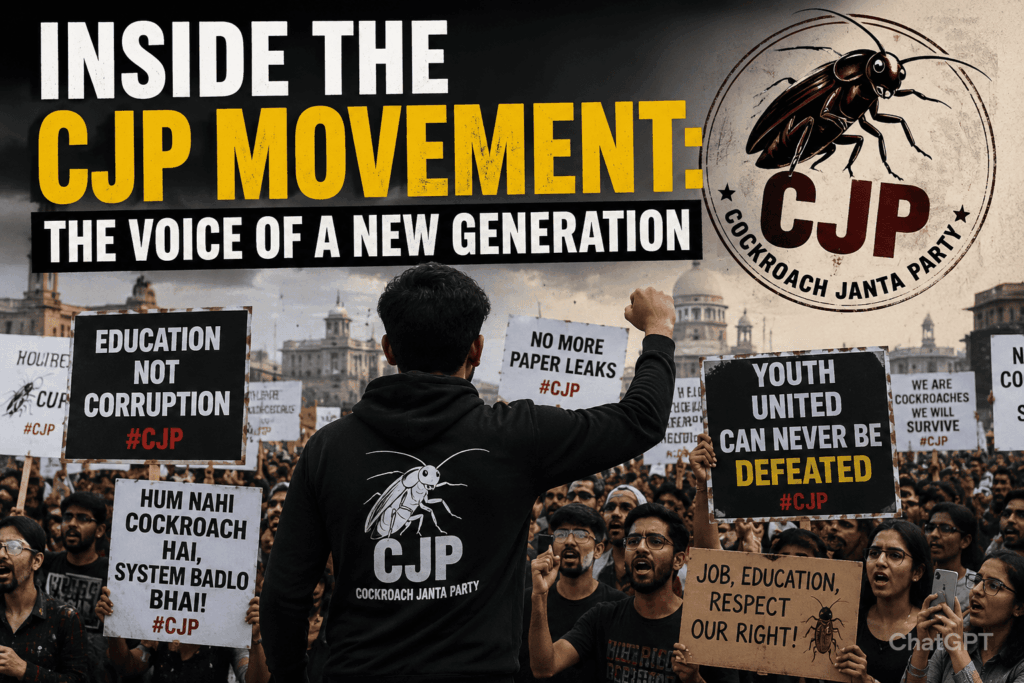
The CJP movement has become one of the most talked-about social and political phenomena in India. What began as an online trend quickly transformed into a broader youth-led conversation about unemployment, education, accountability, and the future of the country. The CJP movement, often associated with the term “Cockroach Janta Party,” has captured the attention of students, young professionals, content creators, and citizens who feel their concerns are not being heard. Whether viewed as a protest movement, a social campaign, or a symbol of youth frustration, the CJP movement has undeniably become the voice of a new generation.
In today’s digital age, social media has the power to amplify ideas at an unprecedented speed. The CJP movement is a prime example of how online communities can evolve into real-world discussions and public demonstrations. As more people engage with the movement, questions continue to emerge about its origins, goals, and long-term impact on society.
What Is the CJP Movement?
The CJP movement refers to a growing youth-driven campaign that gained popularity through social media platforms. While many first encountered it through memes, viral posts, and online discussions, the movement quickly expanded beyond internet culture.
At its core, the movement represents concerns shared by many young people regarding employment opportunities, educational reforms, transparency, and public accountability. Supporters argue that the movement provides a platform for discussing issues that directly affect students and job seekers.
Unlike traditional political organizations, the CJP movement relies heavily on digital engagement. Supporters use social media platforms to spread awareness, organize discussions, and share their experiences regarding challenges faced by young people across the country.
Why Is the CJP Movement Trending?
The rapid growth of the CJP movement can be attributed to several factors.
Social Media Amplification
Platforms such as Instagram, YouTube, and X have played a significant role in increasing the visibility of the movement. Viral videos, memes, and discussion threads helped introduce the movement to millions of users within a short period.
Useful resources:
Growing Youth Frustration
Many young people face challenges related to education, competitive examinations, and employment opportunities. These concerns have fueled discussions that resonate with a large audience.
The movement gained momentum because it addresses topics that many students and graduates encounter in their daily lives. As a result, the message quickly spread among younger demographics.
Community Participation
One of the most notable aspects of the movement is the level of community participation. Supporters contribute content, share personal stories, and engage in conversations that strengthen the movement’s reach.
This collaborative approach has allowed the movement to remain highly visible and relevant across multiple online platforms.
The Role of Youth in the CJP Movement
The voice of a new generation is perhaps the defining characteristic of the CJP movement. Young people are not merely observers; they are active participants shaping the direction of discussions.
Students Leading the Conversation
Students have emerged as one of the most active groups within the movement. Many use the platform to raise awareness about educational challenges, examination systems, and career concerns.
As educational competition increases, students are seeking greater transparency and opportunities. The movement provides a space where these issues can be openly discussed.
Young Professionals Joining the Cause
Beyond students, young professionals have also contributed significantly to the movement. Their experiences with job markets, workplace expectations, and career development add another dimension to the conversation.
This diverse participation helps ensure that the movement reflects a broad range of perspectives.
How Social Media Changed Modern Activism
The CJP movement highlights how activism has evolved in the digital era.
From Hashtags to Real Conversations
In the past, movements often relied on traditional forms of communication. Today, hashtags and viral content can reach millions of people within hours.
Social media allows individuals to connect with others who share similar concerns. This creates a sense of community that can strengthen collective action.
Digital Storytelling
Supporters frequently use videos, graphics, and personal stories to communicate their message. This form of digital storytelling makes complex issues easier to understand and more relatable.
For more information about digital communication trends, visit:
Key Issues Raised by the CJP Movement
The CJP movement focuses on several topics that resonate with younger generations.
https://www.qaskme.com/the-impact-of-ai-on-communication-and-the-future-of-conversations/
Employment Opportunities
Job creation and career growth remain major concerns for many young people. Discussions often center around improving opportunities and ensuring fair access to employment.
Education and Examinations
Educational reform is another recurring theme. Participants frequently discuss examination systems, academic pressure, and the need for improved educational infrastructure.
Transparency and Accountability
Supporters emphasize the importance of transparency in institutions and decision-making processes. Many believe that greater accountability can help address public concerns more effectively.
Youth Representation
A common sentiment within the movement is that young voices deserve greater representation in discussions that shape the future.
Criticisms and Challenges Facing the CJP Movement
Like any major social movement, the CJP movement faces criticism and challenges.
Some critics argue that online popularity does not always translate into long-term impact. Others question whether the movement can maintain momentum over time.
There are also debates regarding leadership, organization, and strategic direction. Because the movement emerged organically through social media, its decentralized nature can make coordination more difficult.
Despite these challenges, supporters maintain that raising awareness is an important first step toward meaningful change.
The Future of the CJP Movement
The future of the CJP movement remains uncertain, but its influence on public discourse is already evident.
Several factors may determine its long-term success:
Continued Public Engagement
Maintaining active participation will be essential. Sustained engagement can help ensure that important issues remain visible.
Constructive Dialogue
Meaningful conversations between citizens, institutions, and policymakers could contribute to positive outcomes.
Adaptation and Growth
As societal challenges evolve, the movement may need to adapt its goals and strategies to remain relevant.
Regardless of its future trajectory, the movement has already demonstrated the power of digital communities to bring attention to issues affecting younger generations.
Lessons from the CJP Movement
The rise of the CJP movement offers several important lessons:
- Young people are increasingly willing to engage in public discussions.
- Social media can transform local conversations into national debates.
- Digital communities can create powerful networks of support.
- Modern activism often combines online engagement with real-world participation.
- Youth voices continue to play a critical role in shaping societal conversations.
These lessons extend beyond the movement itself and reflect broader changes occurring in the relationship between technology, communication, and civic participation.
Conclusion
The CJP movement represents far more than a viral trend. It reflects the hopes, frustrations, and aspirations of a generation seeking greater opportunities and representation. By leveraging the power of social media, supporters have created a platform that encourages discussion around employment, education, transparency, and accountability.
Whether the movement evolves into a lasting force or remains a defining moment of digital activism, its impact on public conversation is undeniable. The story of the CJP movement demonstrates how young people can use technology, creativity, and collective action to ensure their voices are heard.
As society continues to navigate complex challenges, the voice of this new generation will likely remain an important force in shaping future discussions and driving meaningful change.