
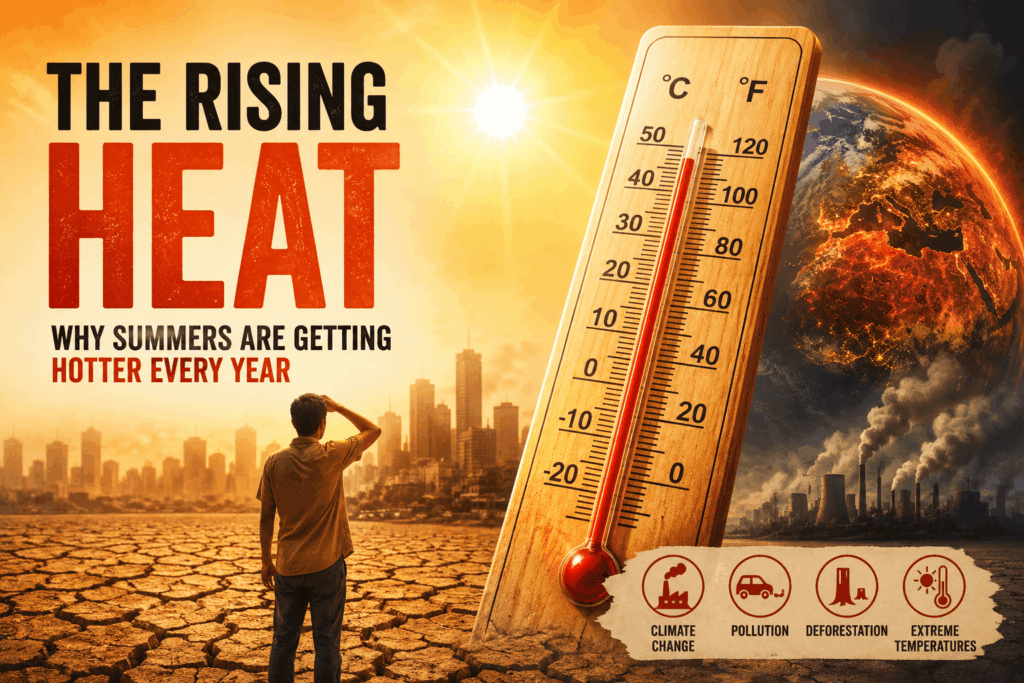
In recent years, The Rising Heat: Why Summers Are Getting Hotter Every Year has become one of the most discussed environmental topics worldwide. From record-breaking temperatures in India to deadly heatwaves across Europe and North America, people everywhere are experiencing longer, hotter, and more dangerous summers. Scientists warn that climate change, pollution, deforestation, and rapid urbanization are contributing heavily to this global crisis. As temperatures continue to rise, understanding why summers are getting hotter every year is more important than ever.
Understanding the Rising Heat Around the World
Summer has always been associated with sunshine, vacations, and outdoor activities. However, the intensity of heat in recent years has transformed summers into a serious public health and environmental concern. Cities are experiencing temperatures that were once considered rare, while rural areas are suffering from droughts, water shortages, and crop damage.
According to the United Nations Climate Action, global temperatures have increased significantly due to human activities, especially the burning of fossil fuels. The release of greenhouse gases traps heat in the Earth’s atmosphere, causing the planet to warm steadily over time.
This warming effect does not just make summers slightly warmer. It increases the likelihood of extreme heatwaves, severe storms, wildfires, and unpredictable weather patterns that affect millions of lives.
What Is Causing Summers to Get Hotter Every Year?
1. Climate Change and Global Warming
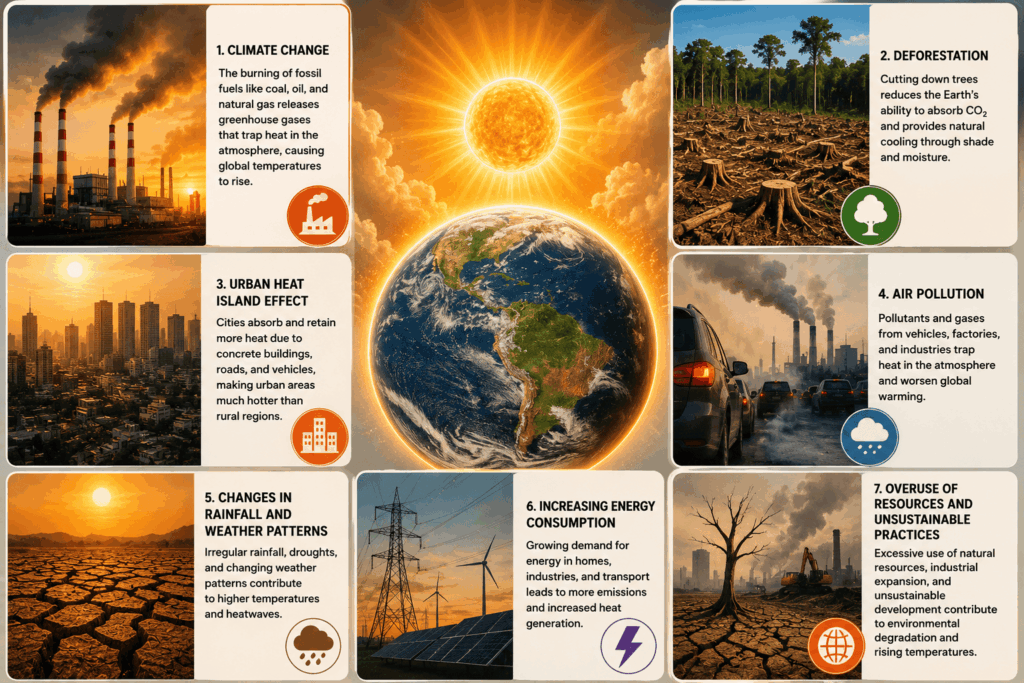
The biggest reason behind rising summer temperatures is climate change. Human activities such as burning coal, oil, and natural gas release large amounts of carbon dioxide and methane into the atmosphere. These gases trap heat and create what scientists call the “greenhouse effect.”
The NASA Climate Change Portal explains that Earth’s average temperature has increased rapidly over the past century, with most warming occurring in recent decades.
As the planet warms:
- Heatwaves become more frequent
- Summers last longer
- Winters become shorter
- Extreme weather events increase
Many scientists believe that if greenhouse gas emissions continue at the current rate, future summers could become even more unbearable.
2. Deforestation and Loss of Green Cover
Trees play an essential role in regulating temperatures. Forests absorb carbon dioxide and provide shade and cooling effects. However, massive deforestation for construction, industries, and agriculture is reducing the planet’s natural cooling systems.
When forests disappear:
- Less carbon dioxide is absorbed
- More heat remains trapped
- Soil dries faster
- Rainfall patterns change
The World Wildlife Fund (WWF) warns that deforestation is accelerating climate change and threatening ecosystems worldwide.
In many cities, trees are replaced by concrete buildings and roads that absorb and retain heat, making urban temperatures significantly higher.
The Urban Heat Island Effect
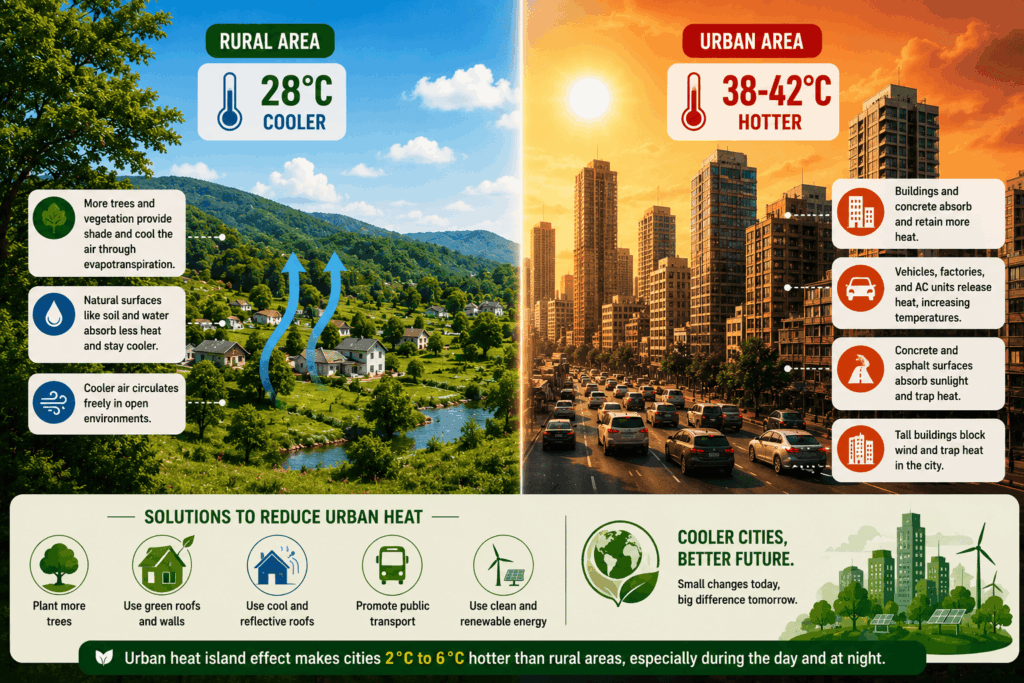
Cities are becoming much hotter than surrounding rural areas because of something called the “Urban Heat Island Effect.” Buildings, roads, and vehicles absorb sunlight during the day and release heat at night, keeping cities warmer for longer periods.
Factors contributing to urban heat include:
- Heavy traffic
- Air pollution
- Lack of parks and trees
- Concrete infrastructure
- High energy consumption
This is why metropolitan cities often feel much hotter than villages or forested regions.
The Environmental Protection Agency (EPA) explains that urban areas can be several degrees hotter than nearby rural regions, especially during summer nights.
Air Pollution and Its Impact on Temperature
Air pollution is not only harmful to human health but also contributes to global warming. Factories, vehicles, and power plants release pollutants that trap heat in the atmosphere.
Major contributors include:
- Carbon dioxide
- Methane
- Industrial emissions
- Vehicle exhaust
- Burning waste
Pollution also worsens respiratory illnesses during heatwaves, making summers even more dangerous for vulnerable groups such as children, older adults, and outdoor workers.
Heatwaves Are Becoming More Dangerous
One of the clearest signs of rising global temperatures is the increasing number of heatwaves worldwide. Heatwaves are long periods of extremely hot weather that can last for days or even weeks.
Recent years have seen:
- Record temperatures in India
- Wildfires in Canada and Australia
- Severe droughts in Europe
- Water shortages in multiple countries
Extreme heat affects:
- Human health
- Agriculture
- Electricity supply
- Water resources
- Wildlife ecosystems
According to the World Health Organization (WHO), heat-related illnesses and deaths are rising globally due to climate change.
How Rising Heat Affects Human Health
Hotter summers are more than just uncomfortable. They can be life-threatening.
Common health problems caused by extreme heat:
- Heat exhaustion
- Heatstroke
- Dehydration
- Breathing difficulties
- Fatigue and dizziness
People working outdoors, including farmers, laborers, delivery workers, and construction workers, are especially vulnerable.
Children and older adults are also at greater risk because their bodies struggle to regulate temperature effectively during extreme heat.
Impact on Agriculture and Food Supply
Farmers are among the hardest hit by rising temperatures. Crops require stable weather patterns and sufficient water to grow properly. Excessive heat damages soil quality, reduces crop yields, and increases water evaporation.
Hotter summers can lead to:
- Lower food production
- Rising food prices
- Drought conditions
- Loss of livestock
- Water scarcity
The Food and Agriculture Organization (FAO) highlights how climate change threatens global food security and farming systems.
Countries heavily dependent on agriculture may face serious economic and social challenges if temperatures continue rising.
Melting Ice and Rising Sea Levels
While hotter summers affect daily life directly, they also contribute to long-term environmental damage. Rising global temperatures are melting glaciers and polar ice caps at alarming rates.
As ice melts:
- Sea levels rise
- Coastal flooding increases
- Marine ecosystems are disrupted
- Island nations face serious risks
Scientists fear that continued warming could permanently change coastlines and displace millions of people worldwide.
The Role of Renewable Energy
One of the most effective ways to reduce global warming is transitioning to renewable energy sources like:
- Solar power
- Wind energy
- Hydroelectric power
- Electric transportation
Renewable energy reduces greenhouse gas emissions and helps slow climate change.
Organizations like International Energy Agency (IEA) are encouraging governments and industries to invest more heavily in clean energy solutions.
What Can Individuals Do to Help?
Although climate change is a global issue, individual actions still matter. Small lifestyle changes can collectively make a significant impact.
Practical steps people can take:
- Plant more trees
- Save electricity
- Use public transport
- Reduce plastic waste
- Conserve water
- Support eco-friendly products
- Use energy-efficient appliances
Communities can also create greener urban spaces and promote environmental awareness programs.
Why Awareness Is Important
Many people still underestimate the seriousness of rising global temperatures. Education and awareness are essential for encouraging action at personal, national, and international levels.
Schools, media platforms, and governments all play an important role in helping people understand:
- The causes of climate change
- The dangers of extreme heat
- Sustainable living practices
- Environmental responsibility
Public awareness can drive policy changes and encourage businesses to adopt environmentally friendly practices.
https://www.qaskme.com/10-must-try-superfoods-for-optimal-health-in-2026-upgrade-your-diet-now/
The Future of Summers
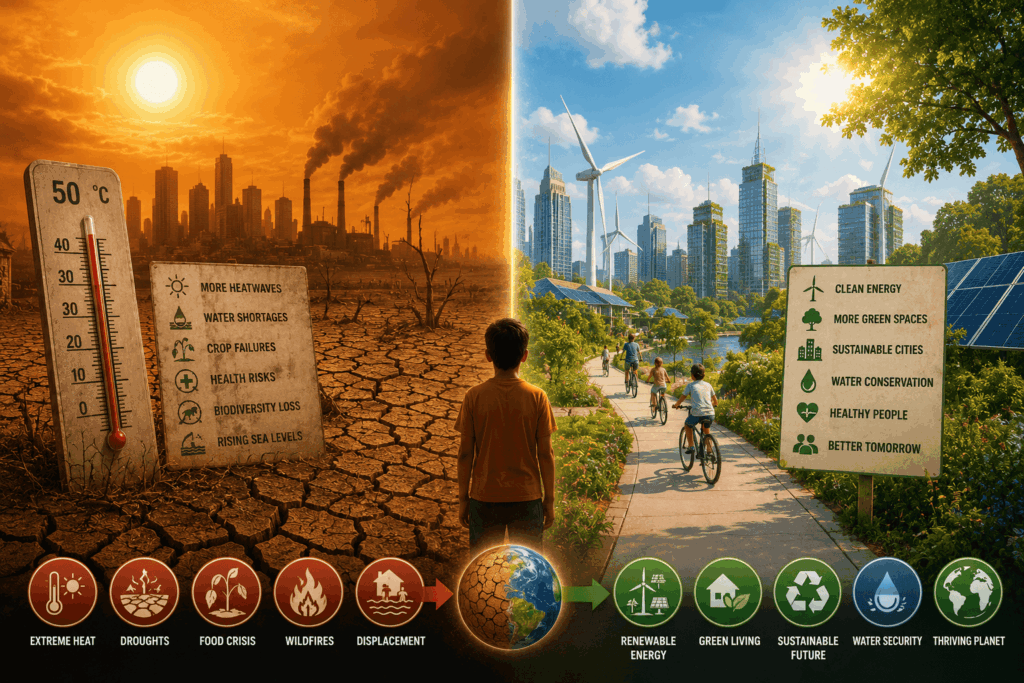
If climate change continues unchecked, future summers may become increasingly difficult to manage. Scientists predict:
- More frequent heatwaves
- Stronger storms
- Severe droughts
- Water shortages
- Increased health risks
However, there is still hope. Governments, scientists, organizations, and communities worldwide are working together to reduce emissions and develop sustainable solutions.
Global agreements like the Paris Climate Agreement aim to limit global warming and encourage countries to take stronger climate action.
Conclusion
The Rising Heat: Why Summers Are Getting Hotter Every Year is no longer just a scientific discussion it is a reality affecting people across the globe. Climate change, pollution, deforestation, and urbanization are driving temperatures higher year after year, creating serious environmental, economic, and health challenges.
The good news is that meaningful action can still make a difference. By reducing pollution, protecting forests, supporting renewable energy, and promoting sustainable lifestyles, humanity can work toward a safer and cooler future.
As awareness grows, individuals and governments alike must recognize that protecting the environment is not just an option it is a necessity for future generations.