In 2026, the future of content creation is evolving faster than ever before. One of the biggest changes shaping the digital world is the rise of AI influencers. These virtual personalities are transforming how brands market products, how audiences engage online, and how creators produce content across platforms like Instagram, TikTok, and YouTube. From virtual fashion models to AI-generated streamers, AI influencers are becoming a major force in modern media and digital communication.
As artificial intelligence continues to improve, businesses and creators are discovering new ways to automate creativity, increase engagement, and build online communities without relying entirely on human influencers. While this innovation opens exciting opportunities, it also raises important questions about authenticity, ethics, creativity, and the future of human creators in a rapidly changing internet landscape.
What Are AI Influencers?
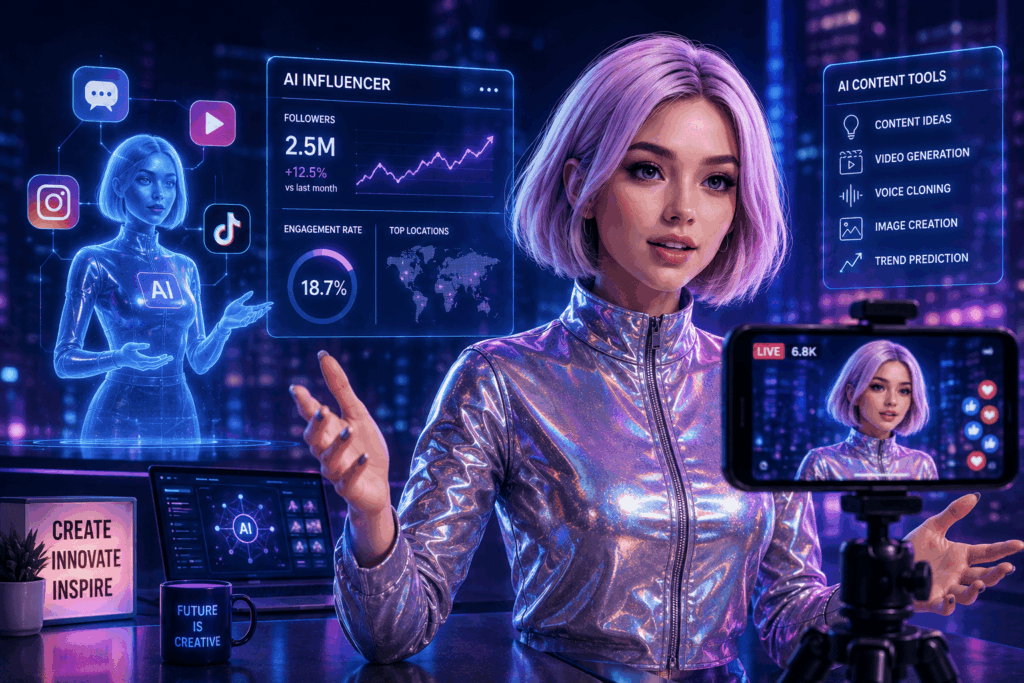
AI influencers are computer-generated personalities designed using artificial intelligence, machine learning, CGI, and advanced animation technologies. These virtual creators often look and behave like real people. They can post photos, create videos, respond to comments, and even collaborate with global brands.
Some AI influencers already have millions of followers online. One of the most famous examples is Lil Miquela, a virtual influencer who has worked with fashion brands, released music, and built a massive social media presence.
Unlike traditional influencers, AI influencers do not age, get tired, or face scheduling conflicts. Brands can fully control their image, messaging, and content strategy, making them highly attractive for digital marketing campaigns.
Why AI Influencers Are Becoming Popular
1. Brands Want More Control
Human influencers can sometimes create controversies that damage a brand’s reputation. AI influencers reduce this risk because companies control their behavior and messaging completely.
This level of control allows businesses to maintain a consistent brand identity while avoiding unexpected scandals or public disagreements.
2. Content Creation Is Faster
Artificial intelligence tools can generate captions, videos, images, and marketing campaigns within minutes. This makes content production significantly faster and more efficient.
Platforms like OpenAI and Adobe Firefly are helping creators automate design, writing, editing, and visual storytelling.
As a result, creators and businesses can produce more content in less time while maintaining high-quality output.
3. Virtual Influencers Never Sleep
AI influencers can interact with audiences 24/7 across multiple time zones. They can livestream, reply to comments, and publish content continuously without physical limitations.
For global brands, this creates a major advantage in maintaining constant engagement with audiences worldwide.
4. AI Personalization Improves Engagement
Artificial intelligence analyzes audience behavior, preferences, and trends to create highly personalized content. This helps AI influencers deliver content that users are more likely to enjoy and share.
Recommendation algorithms on platforms like TikTok and Instagram already use AI to keep users engaged. AI influencers simply extend this strategy further.
The Role of AI in Modern Content Creation
AI is no longer limited to chatbots or automated customer service. It is now deeply integrated into the creative process itself.
Today, artificial intelligence can:
- Generate blog articles
- Create realistic images
- Produce video scripts
- Edit videos automatically
- Clone voices
- Design graphics
- Compose music
- Translate content instantly
- Analyze audience trends
Tools such as Canva AI, Runway ML, and Synthesia are making advanced content creation accessible even for beginners.
This shift is allowing small creators to compete with larger media companies by reducing production costs and saving time.
How AI Influencers Are Changing Social Media
Virtual Beauty and Fashion Models
Fashion brands are increasingly using AI-generated models in advertising campaigns. Virtual models can wear digital outfits, appear in virtual fashion shows, and represent brands globally without physical travel.
This trend is especially popular in the metaverse and digital fashion industries.
AI Streamers and Gamers
AI-powered streamers are becoming popular in gaming communities. These virtual personalities can interact with viewers in real time using voice synthesis and machine learning.
Gaming companies are exploring AI characters that adapt dynamically to audience reactions, creating more immersive entertainment experiences.
AI-Generated Video Content
Short-form videos dominate social media in 2026. AI tools can now create realistic avatars, edit clips automatically, and generate subtitles instantly.
This automation allows creators to focus more on ideas and storytelling rather than technical editing.
The Benefits of AI Influencers
Cost Efficiency
Hiring traditional influencers can be expensive. AI influencers reduce costs associated with travel, production teams, scheduling, and long-term contracts.
Unlimited Creativity
Virtual creators can exist in fantasy worlds, futuristic cities, or completely imaginary environments. Their appearance and personality can change instantly depending on trends or campaigns.
Global Reach
AI influencers can communicate in multiple languages and connect with audiences across different cultures using real-time translation technology.
Consistent Branding
Unlike human creators, AI influencers maintain a perfectly consistent tone, appearance, and posting schedule.
The Challenges and Ethical Concerns
While AI influencers offer many benefits, they also raise serious ethical questions.
Authenticity Issues
Many people value genuine human experiences online. AI influencers may struggle to create emotional authenticity because audiences know they are not real people.
Some users worry that social media is becoming overly artificial and disconnected from real life.
Job Displacement
As AI automates creative work, some creators fear losing opportunities in industries like photography, graphic design, marketing, and entertainment.
However, others believe AI will create new roles focused on managing, training, and collaborating with artificial intelligence systems.
Misinformation Risks
AI-generated content can spread misinformation if used irresponsibly. Deepfake technology and synthetic media may confuse audiences or manipulate public opinion.
Organizations like UNESCO and World Economic Forum are discussing ethical frameworks for responsible AI use in media and communication.
Unrealistic Beauty Standards
Virtual influencers often appear physically perfect, which may contribute to unrealistic beauty expectations among young audiences.
This concern has already sparked debates around mental health and social media culture.
Will AI Replace Human Influencers?
The short answer is no at least not completely.
Human connection remains extremely valuable online. Audiences still relate strongly to real emotions, personal experiences, and authentic storytelling.
Instead of replacing human creators entirely, AI is more likely to become a creative partner. Many influencers already use AI tools for editing, scripting, analytics, and content planning.
The future of content creation may involve collaboration between humans and AI rather than competition.
For example:
- Human creators may focus on storytelling and emotional connection.
- AI tools may handle repetitive production tasks.
- Brands may combine real influencers with virtual personalities in campaigns.
This hybrid model could redefine digital creativity over the next decade.
https://www.qaskme.com/unlocking-the-potential-the-impact-of-short-form-video-content-in-2026/
The Future of Content Creation in 2030 and Beyond
The next few years will likely bring even more dramatic innovation.
Future trends may include:
Fully Interactive AI Personalities
AI influencers may eventually hold natural conversations using advanced conversational intelligence.
Personalized Virtual Creators
Users could create custom AI influencers tailored to their interests, hobbies, or learning goals.
AI-Powered Virtual Worlds
The metaverse may become filled with intelligent digital personalities acting as entertainers, teachers, assistants, and creators.
Hyper-Realistic Digital Humans
Advances in CGI and machine learning could make virtual influencers almost indistinguishable from real humans.
AI-Generated Entertainment
Movies, podcasts, music videos, and livestreams may increasingly feature AI-generated hosts and performers.
How Creators Can Adapt to the AI Revolution
Content creators do not need to fear AI. Instead, adapting to these technologies can provide a competitive advantage.
Here are some ways creators can stay relevant:
- Learn AI-powered editing tools
- Focus on authenticity and storytelling
- Build strong personal communities
- Experiment with virtual content
- Use AI for productivity, not replacement
- Stay informed about ethical AI practices
Creators who combine human creativity with artificial intelligence will likely thrive in the future digital economy.
Final Thoughts
The future of content creation is being reshaped by artificial intelligence at an incredible pace. AI influencers are no longer science fiction they are already changing social media, digital marketing, entertainment, and online communication.
While concerns about ethics, authenticity, and automation remain important, AI also offers exciting opportunities for innovation and creativity. The most successful creators and brands in the coming years may not be those who resist AI, but those who learn how to work alongside it responsibly.
As technology continues evolving, one thing is clear: the digital world of tomorrow will look very different from today. Whether through virtual influencers, AI-generated media, or personalized digital experiences, artificial intelligence is becoming one of the most powerful creative tools of the modern era.