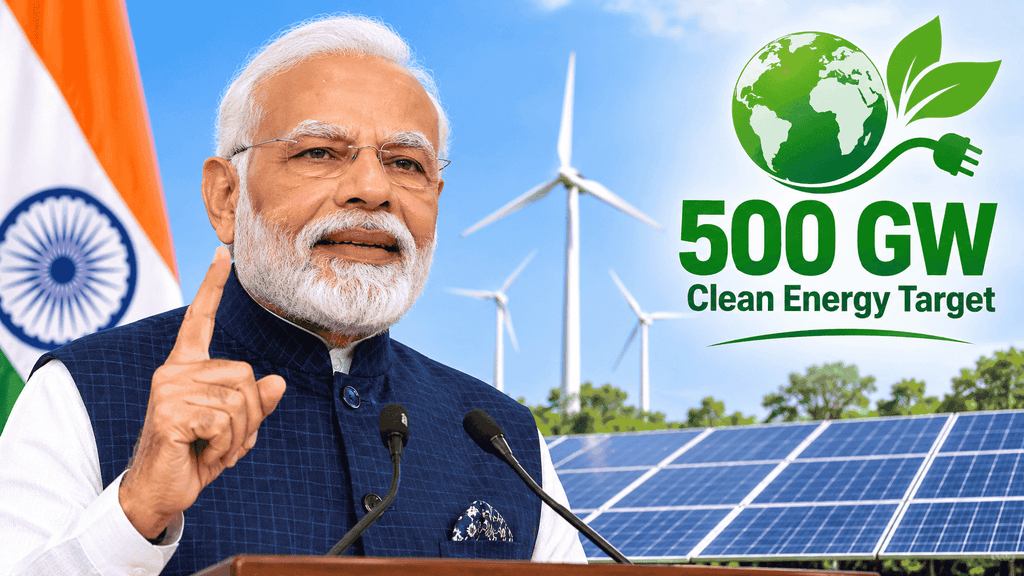
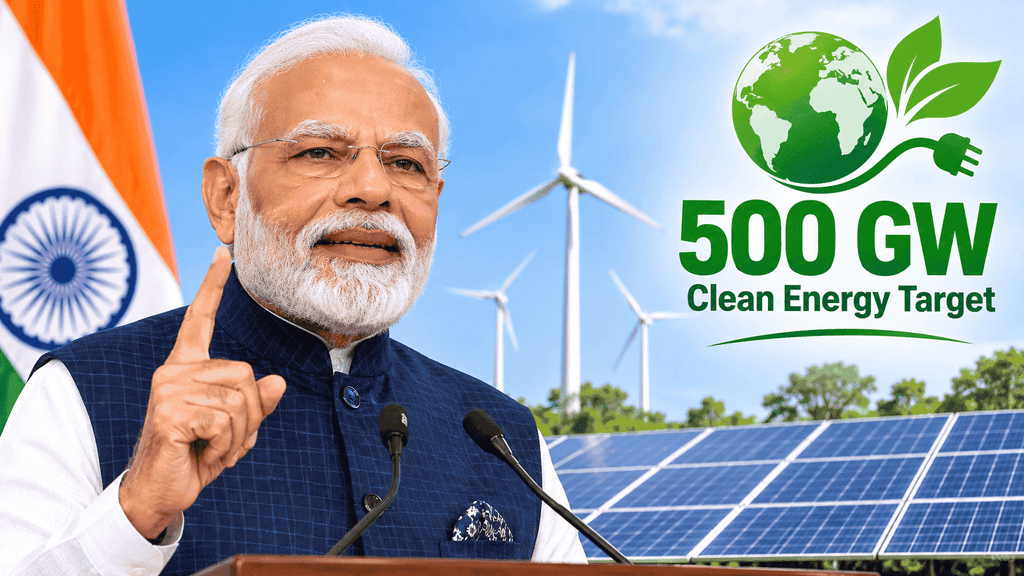
India Green Energy News 2026 highlights the country’s growing renewable energy sector after Prime Minister Narendra Modi addressed the Bharat Renewable Energy Summit and Expo 2026 in New Delhi. According to reports by The Times of India, the Prime Minister said India’s investments in clean energy have helped cushion the economic impact of the West Asia crisis. He also highlighted the importance of reducing dependence on fossil fuels and improving energy security.
India is expanding its renewable energy capacity through solar power, wind energy, green hydrogen and other non-fossil energy sources. The country is also working towards its 500 GW non-fossil energy capacity target by 2030. These developments are important for India’s economy, electricity supply and long-term energy plans.
India Green Energy News 2026: Renewable Energy Progress
India has made significant progress in renewable energy over the past decade. Solar parks, wind power projects and rooftop solar installations are contributing to the country’s electricity generation.
During the Bharat Renewable Energy Summit and Expo 2026, Prime Minister Narendra Modi highlighted India’s clean energy development. The report stated that non-fossil energy sources account for more than half of India’s installed power capacity.
This progress is important because India needs a reliable and affordable electricity supply for households, industries, agriculture, and businesses.
Renewable energy can also help reduce the country’s dependence on imported fossil fuels. However, the expansion of clean energy requires investment in transmission networks, electricity storage and manufacturing facilities.
India’s 500 GW Non-Fossil Energy Capacity Target
India is working towards achieving 500 GW of non-fossil fuel energy capacity by 2030. This target includes energy sources such as solar, wind, hydro, and nuclear power.
According to The Times of India report, India had nearly 300 GW of non-fossil installed power capacity at the time of the summit. The Prime Minister also highlighted the country’s progress towards its climate commitments.
The 500 GW target is an important part of India’s long-term energy strategy. To achieve it, the country needs to continue developing renewable energy projects and improving its power infrastructure.
The target also creates opportunities for businesses involved in solar panel manufacturing, wind turbines, battery storage,e and electricity transmission.
Renewable Energy Investment in India
Investment is an important factor in the growth of India’s clean energy sector. New projects require funding for solar plants, wind farms, transmission lines, energy storage systems and manufacturing facilities.
The Prime Minister highlighted the investment opportunities available in India’s renewable energy sector. The Times of India reported that more than ₹15 lakh crore had been invested in the sector over the past decade.
The report also mentioned that investment opportunities could exceed ₹20 lakh crore by the end of the decade.
These investments may support employment, infrastructure development and the growth of renewable energy businesses. They can also encourage domestic manufacturing and attract international investors.
However, the successful completion of projects depends on land availability, financing, grid connectivity, ty and timely implementation.
Solar Energy Development in India
Solar energy is one of the major contributors to India’s renewable energy growth. The country receives abundant sunlight in many regions, making solar power suitable for electricity generation.
Solar energy is being developed through large solar parks as well as rooftop installations. Households, businesses, government buildings,ngs and farmers can benefit from solar technology.
The PM Surya Ghar Muft Bijli Yojana is one of the important initiatives supporting rooftop solar installations for residential households.
Under this scheme, eligible households can apply for financial assistance according to the applicable guidelines. Solar power can help households reduce their electricity expenses, depending on system capacity and electricity consumption.
Official scheme information is available at:
https://pmsuryaghar.gov.in/
Wind Energy and Green Hydrogen Development
Wind energy is another important part of India’s clean energy strategy. Wind power projects are being developed in states with suitable wind resources.
Solar and wind energy can complement each other. Their combination, along with battery storage, can help improve the availability of renewable electricity.
India is also focusing on green hydrogen production. Green hydrogen is produced using renewable electricity to split water into hydrogen and oxygen.
The National Green Hydrogen Mission aims to support the development of green hydrogen production, technology and related infrastructure.
More information about the mission is available here:
https://mnre.gov.in/en/national-green-hydrogen-mission/
Green hydrogen may have applications in industries such as refining, fertilisers, steel and transportation. Its wider use will depend on production costs, infrastructure,ture and technological development.
Benefits of India’s Green Energy Mission
The expansion of renewable energy can provide several benefits to India.
Reduced Dependence on Imported Fuels
India imports a significant amount of fossil fuels. Increasing domestic renewable energy generation can help reduce exposure to international fuel price fluctuations.
Improved Energy Security
Solar, wind, and other renewable sources can strengthen the country’s energy supply. A diversified energy system can reduce the risks associated with dependence on a limited number of fuel sources.
Employment Opportunities
Renewable energy projects require workers for manufacturing, installation, maintenance, engineering, and project management. The sector may create employment opportunities as new projects are developed.
Environmental Benefits
Renewable energy sources generally produce lower greenhouse gas emissions during electricity generation than fossil fuels. Their wider use can support India’s environmental and climate objectives.
Challenges in India’s Renewable Energy Growth
Although India has made progress, several challenges remain.
One major challenge is electricity storage. Solar and wind power generation can vary according to weather conditions. Battery storage and other technologies can help manage this variation.
Another challenge is transmission infrastructure. Renewable energy projects may be located far from areas with high electricity demand. Strong transmission networks are therefore necessary.
Land availability, project financing, equipment costs,s and timely approvals can also affect the development of renewable energy projects.
India will need continued investment and effective implementation to achieve its long-term clean energy targets.
Future of Renewable Energy in India
India’s renewable energy sector is expected to remain an important part of the country’s economic and infrastructure development.
The 500 GW non-fossil energy capacity target for 2030 provides a direction for future projects. Solar power, wind energy, green hydrogen,n and energy storage are likely to play important roles in this transition.
Government initiatives and private investment can support the expansion of clean energy infrastructure. At the same time, reliable electricity transmission and storage will be essential.
The future growth of the sector will depend on how effectively India addresses these challenges and implements its energy plans.
India Green Energy News 2026: Key Updates
The Bharat Renewable Energy Summit and Expo 2026 brought attention to India’s renewable energy progress and future investment opportunities.
Prime Minister Narendra Modi highlighted the role of clean energy investments in improving energy security. India is also continuing its efforts towards the 500 GW non-fossil energy capacity target by 2030.
The country’s clean energy development includes solar power, wind energy, green hydrogen, gen and improvements in electricity infrastructure.
For more updates, readers can follow reliable news sources and official government announcements.