Department: Indian Space Research Organisation (ISRO), Department of Space, Government of India.
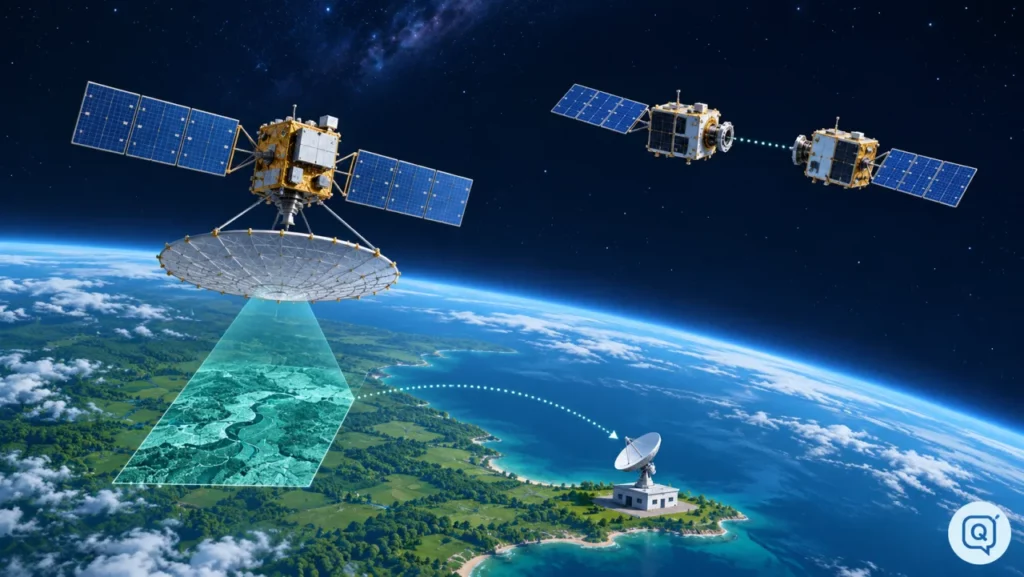
ISRO space technology careers span work in flight software, electronics, manufacturing, ground systems and data analysis. Two missions show why these paths can look very different. SpaDeX brought satellites together in orbit, while NISAR uses radar to observe changes on Earth. The skills you build depend on which part of that work interests you.
How SpaDeX connects to controls and testing
Before two spacecraft dock, they need to estimate where they are relative to each other and how they are moving. Engineers design the sensors, communication links and software that support those decisions. They then test how the software responds when measurements are noisy or arrive late. ISRO describes the mission’s docking hardware, sensors and test beds in its SpaDeX mission overview.
If controls or embedded systems interest you, start with a simple bench or simulation project. Keep a record of the input, expected result and observed error. Try an ordinary case and a failure case, such as a temporary gap in the sensor readings. A short report that explains what the system did and why is more informative than a video of a successful demo alone.
What Earth observation work looks like
NISAR is a joint NASA and ISRO mission. Radar lets it observe changes in land and ice even through clouds or after dark. Engineers build and operate the instrument. Analysts then turn those measurements into products that researchers and other organisations can use. That work can involve image processing, mapping, data pipelines and quality checks. Read ISRO’s NISAR mission overview.
A beginner can practise with public satellite data. Choose a question about one place, compare observations from different dates and note what you can conclude. For example, water extent can change between images. Differences in weather, sensor settings or the way you process the data may explain part of what you see. List those limitations alongside your map.
Choose a project that matches the role
- Electronics: build a small sensor logger and show how you checked the measurements.
- Software: build a simulation or data pipeline with documented inputs and repeatable tests.
- Mechanical and manufacturing: document a design, its material choices and an inspection method.
- Geospatial analysis: prepare a reproducible map with clear notes about the source data and uncertainty.
ISRO’s report also covers newer launch vehicles and the development work needed to test them. Use the report to learn the names of projects and teams, then look for current vacancies or internships through the relevant institute or employer. Download the ISRO annual report (PDF).
Discuss ISRO space technology careers on Qaskme.
Cover image: AI-generated editorial illustration, not an official recruitment notice.