
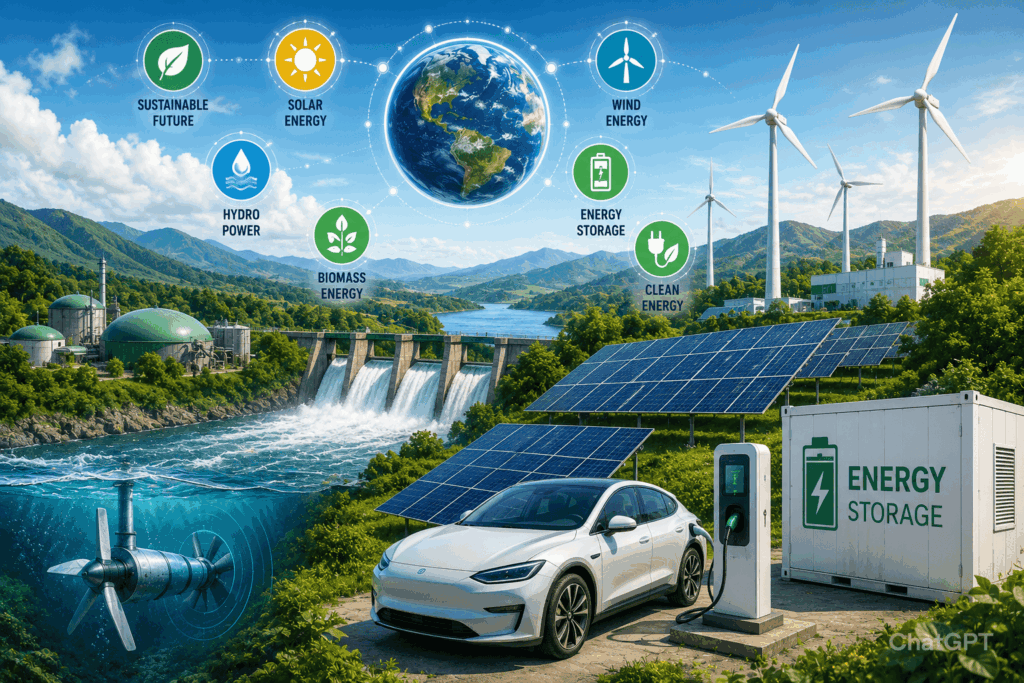
The rapid advancement of renewable energy innovations is revolutionizing the world and transforming how societies generate, store, and consume power. As concerns about climate change, energy security, and sustainability continue to grow, governments, businesses, and communities are increasingly investing in cleaner alternatives to fossil fuels. These groundbreaking renewable energy technologies are helping create a greener future while supporting economic growth and environmental protection.
Today, renewable energy is no longer viewed as a niche solution. It has become a global movement that is reshaping industries, creating jobs, and driving innovation. From advanced solar panels and offshore wind farms to green hydrogen and next-generation battery storage, renewable energy innovations are paving the way toward a more sustainable world.
Why Renewable Energy Innovations Matter More Than Ever
The global demand for energy continues to increase as populations grow and economies expand. Traditional energy sources such as coal, oil, and natural gas contribute significantly to greenhouse gas emissions and environmental degradation.
Renewable energy innovations help address these challenges by:
- Reducing carbon emissions
- Improving energy security
- Lowering long-term energy costs
- Supporting sustainable economic development
- Creating new employment opportunities
- Enhancing public health through cleaner air
As technology advances, renewable energy systems are becoming more efficient, affordable, and accessible than ever before.
Solar Power: Leading Renewable Energy Innovations
Solar energy remains one of the most important renewable energy innovations of the modern era. Technological improvements have significantly increased the efficiency of solar panels while reducing installation costs.
Advanced Solar Panel Technologies
Traditional solar panels continue to improve, but newer technologies are pushing efficiency even further.
Some notable developments include:
- Bifacial solar panels that capture sunlight from both sides
- Perovskite solar cells with higher efficiency potential
- Flexible solar panels for diverse applications
- Building-integrated photovoltaic systems
These innovations enable solar energy to be used in homes, businesses, transportation systems, and large-scale power plants.
To learn more about solar energy developments, visit International Renewable Energy Agency (IRENA).
Floating Solar Farms
Floating solar installations are becoming increasingly popular. These systems are placed on reservoirs, lakes, and other water bodies, helping conserve land while generating clean electricity.
Benefits include:
- Reduced water evaporation
- Improved panel efficiency through cooling
- Efficient use of unused water surfaces
Wind Energy Innovations Transforming Global Power Generation
Wind energy has experienced remarkable growth over the past decade. Modern wind turbines are more powerful, efficient, and capable of generating electricity in diverse environments.
Offshore Wind Farms
Offshore wind projects represent one of the most exciting renewable energy innovations today.
Advantages include:
- Stronger and more consistent winds
- Greater energy production
- Reduced land-use conflicts
- Large-scale electricity generation
Countries around the world are investing heavily in offshore wind infrastructure to meet climate and energy goals.
Floating Wind Turbines
Floating wind technology allows turbines to operate in deeper waters where traditional foundations are not practical.
This innovation significantly expands the areas available for wind energy development and increases overall power generation potential.
Green Hydrogen: A Game-Changer Among Renewable Energy Innovations
Green hydrogen is emerging as a revolutionary clean energy solution. Unlike conventional hydrogen production, green hydrogen is created using renewable electricity to split water into hydrogen and oxygen.
Benefits of Green Hydrogen
Green hydrogen offers several advantages:
- Zero carbon emissions during production
- Long-term energy storage capability
- Decarbonization of heavy industries
- Support for clean transportation systems
Industries such as steel manufacturing, aviation, and shipping are exploring hydrogen-based solutions to reduce emissions.
Learn more about global hydrogen initiatives through International Energy Agency (IEA).
Energy Storage Innovations Supporting Renewable Energy Growth
One of the biggest challenges facing renewable energy systems is intermittency. Solar and wind power generation depend on weather conditions, making energy storage essential.
Advanced Battery Storage Systems
Battery technology continues to evolve rapidly.
Key developments include:
- Lithium-ion battery improvements
- Solid-state batteries
- Flow batteries
- Grid-scale energy storage solutions
These technologies help store excess energy and ensure reliable electricity supply when renewable generation decreases.
Long-Duration Energy Storage
Researchers are developing systems capable of storing renewable energy for days, weeks, or even months.
Examples include:
- Compressed air energy storage
- Thermal energy storage
- Gravity-based energy storage
- Hydrogen storage systems
Long-duration storage could significantly enhance grid reliability and renewable energy adoption.
Hydropower Innovations Creating Cleaner Energy Solutions
Hydropower remains one of the world’s largest renewable electricity sources. Modern technologies are making hydropower more efficient and environmentally friendly.
Small-Scale Hydropower Systems
Small hydropower installations generate electricity with minimal environmental impact.
Benefits include:
- Reduced infrastructure requirements
- Local energy generation
- Lower ecological disruption
- Improved rural electrification
Marine and Tidal Energy
Ocean-based renewable energy innovations are gaining momentum.
These technologies harness:
- Tidal currents
- Ocean waves
- Marine thermal energy
Although still developing, marine energy has enormous potential to contribute to future clean energy systems.
Smart Grids and Digital Renewable Energy Innovations
Digital technologies are helping optimize renewable energy systems.
What Are Smart Grids?
Smart grids use advanced sensors, artificial intelligence, and data analytics to improve electricity distribution and management.
Advantages include:
- Better energy efficiency
- Faster outage detection
- Improved grid reliability
- Enhanced renewable integration
Artificial Intelligence in Renewable Energy
AI is increasingly being used to:
- Predict energy demand
- Optimize power generation
- Monitor equipment performance
- Improve maintenance planning
The combination of AI and renewable energy innovations is creating smarter and more resilient energy systems.
Renewable Energy Innovations in Transportation
Transportation accounts for a significant portion of global emissions. Renewable energy innovations are helping create cleaner mobility solutions.
Electric Vehicles
Electric vehicles (EVs) continue to gain popularity worldwide.
Key benefits include:
- Lower emissions
- Reduced fuel costs
- Improved energy efficiency
- Support for renewable-powered transportation
Sustainable Aviation and Shipping
Researchers are developing renewable fuels and hydrogen-powered systems for aviation and maritime transportation.
These advancements could dramatically reduce emissions in sectors that have traditionally been difficult to decarbonize.
Learn more about sustainable transportation efforts through United Nations Environment Programme (UNEP).
Challenges Facing Renewable Energy Innovations
Despite significant progress, several challenges remain.
Infrastructure Requirements
Expanding renewable energy adoption requires:
- Modernized electrical grids
- Additional transmission lines
- Increased storage capacity
- Continued technological investment
Resource Availability
Manufacturing renewable technologies often requires critical minerals and materials.
Responsible sourcing, recycling, and innovation will be important for long-term sustainability.
Policy and Regulatory Considerations
Government policies play a major role in accelerating renewable energy deployment.
Supportive regulations can encourage investment, research, and widespread adoption of clean technologies.
https://www.qaskme.com/invest-in-the-future-top-green-energy-stocks-to-watch-in-2026/
The Future of Renewable Energy Innovations
The future of renewable energy looks incredibly promising. Continued investments in research and development are expected to produce even more efficient, affordable, and scalable solutions.
Future innovations may include:
- Ultra-efficient solar materials
- Next-generation nuclear fusion technologies
- Advanced hydrogen economies
- AI-powered energy networks
- Carbon-neutral industrial processes
As these technologies mature, renewable energy could become the dominant source of global electricity generation.
Conclusion
The rise of renewable energy innovations is transforming the world in extraordinary ways. Solar power, wind energy, green hydrogen, advanced battery storage, smart grids, and sustainable transportation solutions are helping build a cleaner, more resilient future.
These innovations not only address environmental challenges but also create economic opportunities, improve energy security, and enhance quality of life for communities around the globe. As technology continues to evolve, renewable energy innovations will remain at the forefront of the global transition toward sustainability, proving that a cleaner and more prosperous future is within reach.