
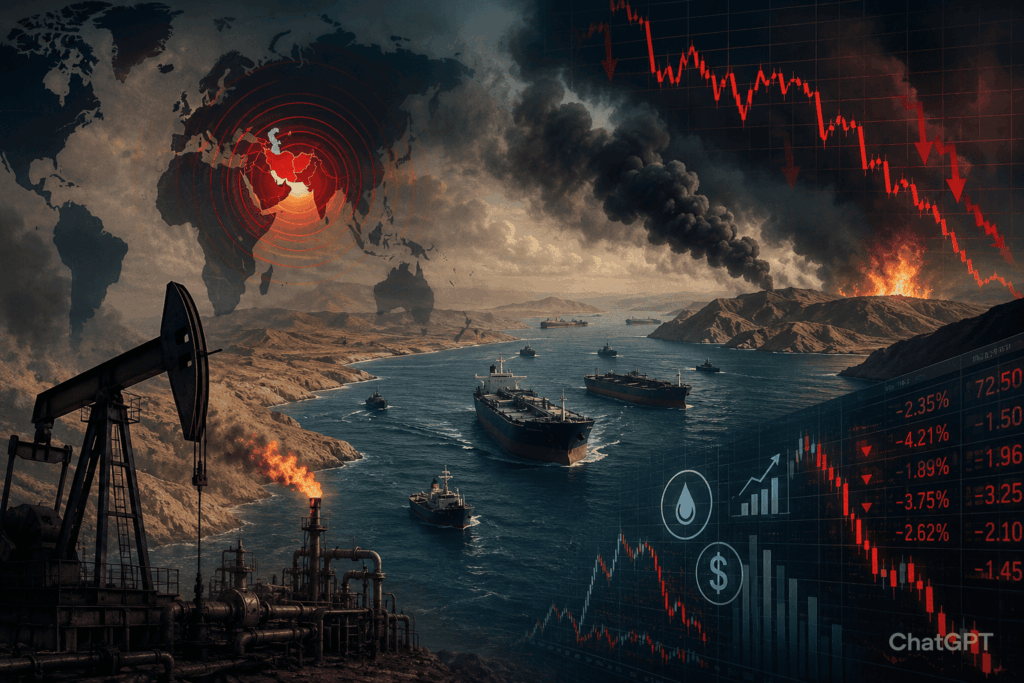
The Strait of Hormuz has experienced multiple periods of geopolitical tension over the past several decades. Each crisis has demonstrated how sensitive global markets are to disruptions in energy transportation routes.
During periods of military confrontation involving Iran and Western powers, oil prices have historically surged due to fears of blocked shipping lanes or attacks on commercial vessels. Even temporary disruptions can create panic among traders because the global economy still depends heavily on stable energy supplies.
One major concern is that modern markets react not only to actual disruptions but also to perceived risks. Financial systems today operate in real time, and news spreads instantly through digital media. A single incident involving oil tankers, military exercises, or sanctions can trigger immediate volatility across global exchanges.
The Brookings Institution has repeatedly emphasized that the Strait of Hormuz remains one of the world’s most vulnerable economic chokepoints because of its strategic importance to energy trade.
Strait of Hormuz Crisis and the Global Supply Chain
The modern global economy depends on interconnected supply chains. Energy plays a central role in transportation, manufacturing, agriculture, and logistics. A Strait of Hormuz crisis can therefore affect industries far beyond oil and gas.
Manufacturing Sector Disruptions
Factories worldwide rely on stable fuel supplies for transportation and production. Rising energy prices increase operating costs for manufacturers, especially in industries such as:
- Automobile production
- Chemicals
- Plastics
- Electronics
- Construction materials
Companies may pass these higher costs to consumers, contributing to inflation and reduced purchasing power.
Shipping Costs and Trade Delays
Global shipping companies often face increased insurance premiums during geopolitical conflicts in sensitive maritime regions. Cargo vessels traveling through or near the Gulf may experience delays due to security checks or rerouted transportation paths.
This can lead to:
- Slower delivery times
- Increased shipping expenses
- Product shortages
- Higher retail prices
International trade organizations such as the World Trade Organization (WTO) closely monitor these disruptions because they can weaken global trade growth.
Energy Security Becomes a Top Priority
A Strait of Hormuz crisis often pushes governments to rethink their energy security strategies. Countries dependent on imported oil may seek ways to reduce vulnerability to external shocks.
Strategic Petroleum Reserves
Many nations maintain emergency oil reserves to protect against sudden supply disruptions. These reserves can temporarily stabilize domestic markets if imports decline.
The International Energy Agency (IEA) coordinates emergency oil-sharing systems among member countries during severe supply crises.
Diversification of Energy Sources
Governments increasingly invest in:
- Solar energy
- Wind power
- Nuclear energy
- Natural gas infrastructure
- Electric transportation systems
Renewable energy development is not only an environmental goal but also a long-term strategy for reducing geopolitical energy risks.
The Strait of Hormuz Crisis and its impact on Currency Markets
Currency markets are also highly sensitive to geopolitical tensions in the Gulf region. Investors often move capital toward safer currencies during global uncertainty.
Emerging Market Currency Pressure
Countries heavily dependent on imported oil may experience weakening currencies when crude prices rise sharply. A weaker currency makes imports more expensive, adding further inflation pressure.
For emerging economies, this combination can create economic instability, particularly when inflation and interest rates rise simultaneously.
Stronger Safe-Haven Currencies
Currencies often viewed as safer investments during crises include:
- U.S. Dollar
- Swiss Franc
- Japanese Yen
The movement of global capital during geopolitical crises can significantly affect international trade balances and borrowing costs.
The Bank for International Settlements regularly studies how geopolitical risks influence currency and financial market stability.
How Consumers Feel the Effects of a Strait of Hormuz Crisis
Although the Strait of Hormuz is geographically far from many countries, ordinary consumers around the world can still feel the effects of a crisis there.
Fuel Prices Increase Quickly
One of the most immediate impacts is higher petrol and diesel prices. Transportation companies often pass increased fuel costs to customers, affecting:
- Public transportation
- Food delivery
- Air travel
- Logistics services
Cost of Living Pressures
When transportation and manufacturing become more expensive, everyday products may also become costlier. Consumers may notice higher prices for:
- Groceries
- Household goods
- Electronics
- Clothing
This creates additional financial pressure on families, particularly in countries already dealing with inflation.
Investor Psychology During Geopolitical Crises
Financial markets are driven not only by economic fundamentals but also by investor psychology. Fear and uncertainty can trigger large market swings even before any physical supply disruption occurs.
Market Volatility Intensifies
During a Strait of Hormuz crisis:
- Investors may rapidly sell risky assets
- Stock indexes can decline sharply
- Commodity markets become volatile
- Trading activity increases significantly
Financial analysts often describe these periods as “risk-off environments,” where investors prioritize capital preservation over aggressive growth strategies.
Media Coverage Amplifies Market Reactions
Continuous media coverage of military developments, sanctions, or diplomatic tensions can intensify market anxiety. Social media and real-time news alerts allow headlines to influence investor behavior within seconds.
The Reuters and Bloomberg frequently provide live updates during geopolitical crises because financial markets react rapidly to new information.
Can Diplomacy Prevent a Larger Economic Crisis?
Diplomatic negotiations remain one of the most important tools for reducing the risk of prolonged instability in the Strait of Hormuz. Many countries recognize that a major conflict in the region could damage the global economy significantly.
International cooperation often focuses on:
- Maritime security
- Trade stability
- Conflict de-escalation
- Protection of commercial shipping routes
Military escalation could potentially affect not only energy prices but also global economic growth, inflation management, and financial market stability for years.
Organizations such as the United Nations Security Council continue to support diplomatic efforts aimed at maintaining peace and stability in critical international waterways.
Long-Term Lessons From the Strait of Hormuz Crisis
The recurring tensions surrounding the Strait of Hormuz highlight several important lessons for the global economy.
Overdependence on Key Chokepoints Is Risky
Heavy reliance on a few strategic shipping routes creates vulnerabilities for global trade systems. Governments and corporations increasingly recognize the importance of diversification.
Renewable Energy Investment May Accelerate
Energy crises often accelerate investments in renewable technologies and alternative transportation systems. Countries seeking greater energy independence may increase support for clean energy infrastructure.
https://www.qaskme.com/iran-oil-crisis-2026-the-impact-on-global-politics-and-economy/
Financial Markets Will Continue Reacting to Geopolitical Risks
Geopolitical instability is likely to remain a major driver of market volatility in the future. Investors, businesses, and policymakers must continue adapting to an increasingly interconnected and unpredictable global environment.
Final Thoughts on the Strait of Hormuz Crisis Sends Shockwaves: Impact on Markets
The phrase “Strait of Hormuz Crisis Sends Shockwaves: Impact on Markets” reflects a broader reality about today’s global economy. A single geopolitical flashpoint can influence oil prices, inflation, supply chains, currency markets, and investor confidence worldwide.
Because the Strait of Hormuz remains central to global energy transportation, any instability there carries enormous economic significance. While governments and businesses continue exploring alternative energy systems and diversified trade routes, the global economy still remains closely tied to the stability of this strategic maritime passage.
For investors, businesses, and consumers alike, understanding how geopolitical tensions influence markets is becoming increasingly important in a rapidly changing world economy.