
In today’s fast-paced world, ultra-processed foods have become a major part of everyday diets. From instant noodles and packaged snacks to sugary cereals and frozen meals, these convenient products are everywhere. But the shocking truth about ultra-processed foods is that they may be quietly affecting your health in ways many people don’t realize. Understanding the impact of ultra-processed foods on your body is essential if you want to make healthier and more informed choices.
Modern supermarkets are filled with colorful packaging and tempting advertisements promoting foods that are quick, affordable, and tasty. However, many of these products contain artificial ingredients, preservatives, excessive sugar, unhealthy fats, and additives designed to improve flavor and shelf life rather than nutrition. While eating them occasionally may not be harmful, consuming them regularly has been linked to serious health concerns.
What Are Ultra-Processed Foods?
Ultra-processed foods are industrially manufactured products made mostly from refined ingredients and artificial substances. These foods often contain little or no whole foods and are designed to be highly convenient and addictive.
Examples include:
- Sugary soft drinks
- Packaged chips and cookies
- Instant soups and noodles
- Processed meats like sausages and nuggets
- Sweetened breakfast cereals
- Frozen pizzas and ready-to-eat meals
- Energy drinks and flavored snacks
Unlike minimally processed foods such as frozen vegetables or plain yogurt, ultra-processed foods undergo multiple manufacturing stages and often include ingredients you would rarely use in a home kitchen.
For more information about healthy eating patterns, visit World Health Organization and Harvard T.H. Chan School of Public Health.
Why Are Ultra-Processed Foods So Popular?
There are several reasons why these foods dominate modern diets:
1. Convenience
Busy lifestyles make quick meals attractive. Many people prefer foods that require little preparation.
2. Long Shelf Life
Preservatives help products last for months, reducing food waste for manufacturers and consumers.
3. Aggressive Marketing
Food companies spend billions on advertisements targeting children, teenagers, and adults.
4. Highly Addictive Taste
Many ultra-processed foods are engineered to trigger pleasure centers in the brain through combinations of sugar, salt, and fat.
5. Affordability
In many areas, processed foods are cheaper and more accessible than fresh produce.
The Hidden Health Risks of Ultra-Processed Foods
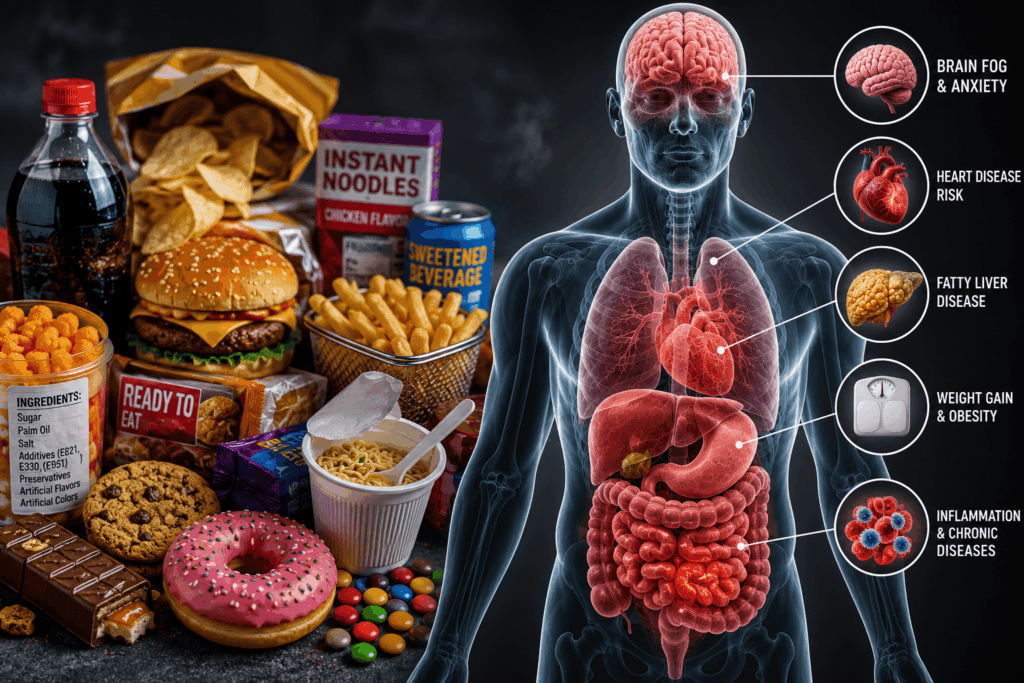
Although these products may seem harmless, research increasingly suggests that excessive consumption can negatively affect nearly every system in the body.
1. Weight Gain and Obesity
Ultra-processed foods are typically high in calories but low in nutrients and fiber. Because they digest quickly, they may not keep you full for long, causing overeating.
Studies have shown that people who consume more ultra-processed foods are more likely to experience:
- Rapid weight gain
- Increased body fat
- Higher risk of obesity
Many processed foods also contain hidden sugars that increase calorie intake without making people feel satisfied.
Learn more about obesity and nutrition at Centers for Disease Control and Prevention.
2. Increased Risk of Heart Disease
A diet high in ultra-processed foods may contribute to:
- High blood pressure
- Elevated cholesterol
- Inflammation
- Poor cardiovascular health
Trans fats, excessive sodium, and refined carbohydrates can place enormous stress on the heart over time. Research suggests that people who regularly consume heavily processed products may face a greater risk of heart attacks and strokes.
Helpful heart health resources are available at American Heart Association.
3. Type 2 Diabetes
Many ultra-processed products contain refined sugars and simple carbohydrates that cause blood sugar spikes. Over time, this can reduce insulin sensitivity and increase the risk of Type 2 diabetes.
Sugary drinks are among the biggest contributors because they deliver large amounts of sugar without providing fullness.
Common high-sugar processed foods include:
- Soda
- Candy
- Sweetened cereals
- Packaged desserts
- Flavored coffee drinks
For diabetes prevention information, visit International Diabetes Federation.
4. Poor Digestive Health
Your digestive system depends on fiber-rich foods to function properly. Unfortunately, ultra-processed foods often lack natural fiber.
Low-fiber diets may lead to:
- Constipation
- Bloating
- Poor gut bacteria balance
- Digestive discomfort
Scientists are increasingly discovering that gut health plays a major role in overall well-being, including mental health and immunity.
5. Mental Health Effects
Emerging research suggests a possible connection between ultra-processed foods and mental health issues such as anxiety and depression.
Although more studies are still needed, experts believe poor nutrition may influence:
- Brain inflammation
- Hormonal balance
- Mood regulation
- Energy levels
Diets rich in whole foods, fruits, vegetables, and healthy fats are often associated with better mental well-being.
Mental wellness resources can be found at National Institute of Mental Health.
6. Increased Inflammation in the Body
Many ultra-processed foods contain artificial additives and unhealthy oils that may contribute to chronic inflammation.
Long-term inflammation has been associated with:
- Arthritis
- Heart disease
- Diabetes
- Certain cancers
- Autoimmune disorders
Reducing processed food intake may help lower inflammation naturally.
Why Reading Food Labels Matters
Many products marketed as “healthy” may still be heavily processed. Learning to read food labels can help you identify unhealthy ingredients.
Watch out for:
- High-fructose corn syrup
- Artificial sweeteners
- Hydrogenated oils
- Excess sodium
- Artificial colors and preservatives
A good rule is: if the ingredient list is extremely long and difficult to understand, the food is likely highly processed.
Food label guidance is available at U.S. Food and Drug Administration.
The Difference Between Processed and Ultra-Processed Foods
Not all processed foods are unhealthy. Some processing methods are helpful and safe.
Minimally Processed Foods
These include:
- Frozen vegetables
- Plain yogurt
- Roasted nuts
- Whole grain bread
These foods still retain most of their natural nutrients.
Ultra-Processed Foods
These products contain industrial ingredients and heavy modifications that reduce nutritional quality.
The key is balance and awareness.
Healthier Alternatives to Ultra-Processed Foods
Replacing heavily processed products with whole foods does not need to happen overnight. Small changes can make a big difference.
Better Snack Choices
Instead of chips and candy, try:
- Fresh fruit
- Nuts and seeds
- Homemade popcorn
- Yogurt
- Hummus with vegetables
Better Drink Options
Replace sugary drinks with:
- Water
- Coconut water
- Herbal tea
- Fresh smoothies
Better Meal Options
Cook simple meals using:
- Whole grains
- Lean proteins
- Vegetables
- Healthy fats
Meal preparation can help reduce dependence on packaged convenience foods.
How Food Companies Influence Consumer Choices
Food corporations carefully design ultra-processed products to maximize cravings and repeat purchases.
Marketing strategies include:
- Bright packaging
- Celebrity endorsements
- Emotional advertising
- Child-focused promotions
- Social media campaigns
Children are especially vulnerable to these tactics, making nutrition education more important than ever.
For information on food marketing and public health, visit UNICEF Nutrition Resources.
Can You Completely Avoid Ultra-Processed Foods?
Completely avoiding ultra-processed foods can be difficult in modern society. The goal should not be perfection but healthier balance.
Helpful steps include:
- Cooking at home more often
- Reading ingredient labels
- Choosing whole foods when possible
- Limiting sugary drinks
- Planning meals ahead
Even gradual improvements can positively affect long-term health.
The Future of Food and Nutrition
As awareness grows, many consumers are demanding healthier options. Food companies are slowly responding by reducing artificial ingredients and offering cleaner products.
Nutrition experts continue to encourage diets focused on:
- Fruits
- Vegetables
- Whole grains
- Lean proteins
- Natural ingredients
Governments and health organizations worldwide are also discussing stricter food labeling and marketing regulations.
Final Thoughts
The shocking truth about ultra-processed foods is that they are deeply woven into modern life, yet their long-term impact on the body can be significant. While these foods offer convenience and strong flavors, relying on them too heavily may increase the risk of obesity, heart disease, diabetes, inflammation, and other health concerns.
The good news is that small lifestyle changes can make a meaningful difference. Choosing more whole foods, preparing meals at home, and understanding food labels can help support better physical and mental health over time.
Healthy eating is not about strict perfection. It is about creating sustainable habits that nourish your body and improve overall well-being. By becoming more aware of what you eat, you can make choices that support a healthier future for yourself and your family.