Understanding the DDU-GKY 2.0 Scheme
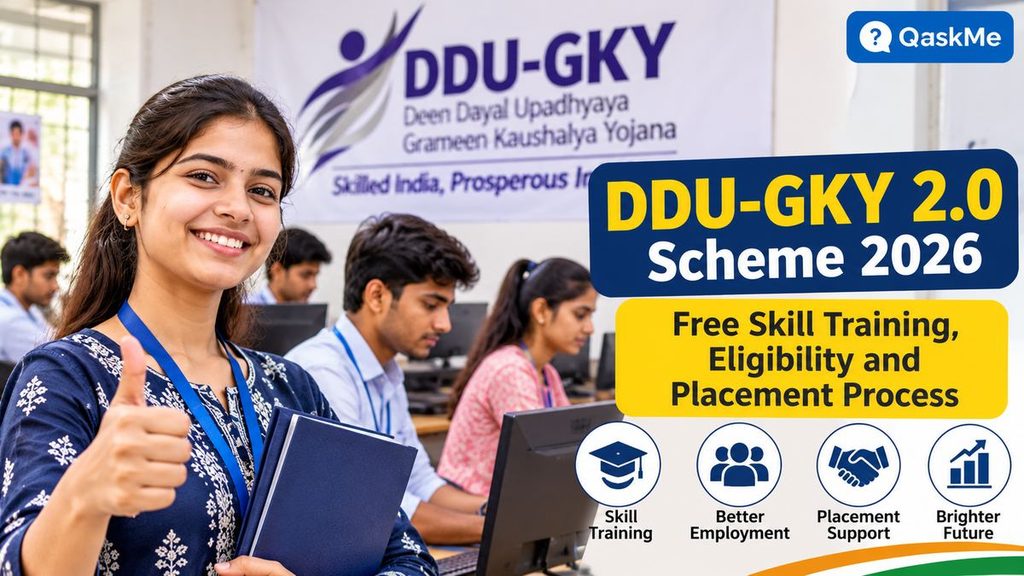
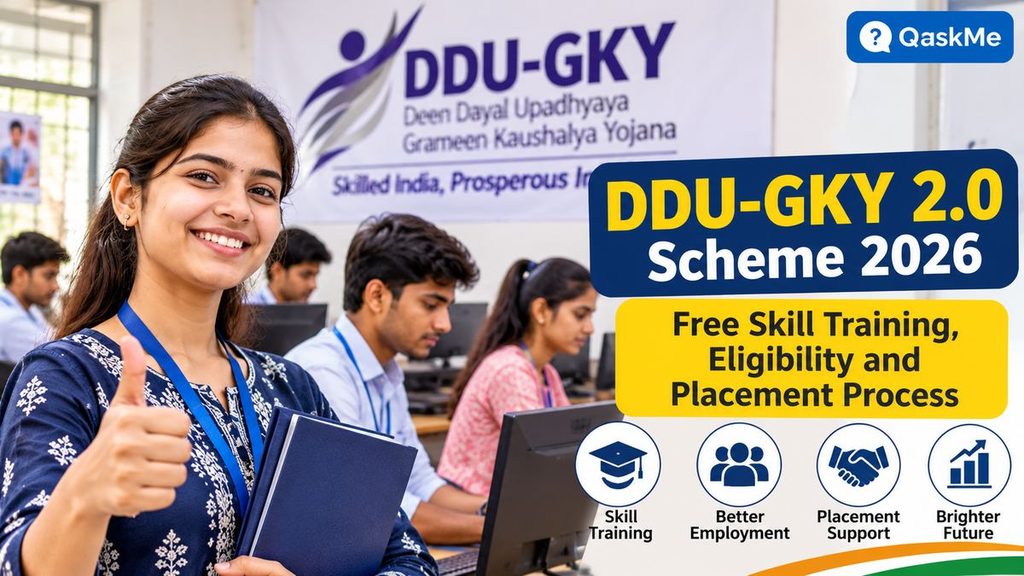
The DDU-GKY 2.0 Scheme 2026 is a government initiative that helps eligible rural youth develop job-related skills and find employment. DDU-GKY stands for Deen Dayal Upadhyaya Grameen Kaushalya Yojana. The Ministry of Rural Development runs this placement-linked skill development programme under the National Rural Livelihoods Mission.
The updated DDU-GKY 2.0 framework focuses on industry-based training, job opportunities and support after placement. It aims to connect young people from poor rural households with skills that employers need.
According to a government update dated 25 September 2026, training batches were expected to begin across many States and Union Territories from October 2026. Therefore, interested candidates should check the latest training-centre and batch information before visiting a centre.
What Is DDU-GKY 2.0?
DDU-GKY is designed to improve employment opportunities for rural youth from economically weaker households. Under the programme, approved training partners provide courses that prepare candidates for different jobs.
The 2.0 version strengthens the earlier programme through improved digital monitoring, industry partnerships, and greater attention to long-term employment. It also gives importance to counselling and support after candidates join a job.
The programme does not provide a government job directly. Instead, it offers skill training and connects successful candidates with employment opportunities in different industries.
Main Highlights of DDU-GKY 2.0 Scheme 2026
Here are some important details about the programme:
| Particular | Details |
|---|---|
| Scheme name | Deen Dayal Upadhyaya Grameen Kaushalya Yojana 2.0 |
| Popular name | DDU-GKY 2.0 |
| Ministry | Ministry of Rural Development |
| Main purpose | Skill training and placement |
| Target group | Eligible rural youth from poor households |
| Training duration | Generally 3 to 12 months, depending on the course |
| Training sectors | Healthcare, IT, retail, logistics, hospitality,y and others |
| Training fee | Free under approved scheme projects |
| Implementation | Through approved training partners |
| Official portal | https://kaushal.rural.gov.in |
The availability of courses and training batches may differ from one state to another.
Benefits of DDU-GKY 2.0 Scheme
The scheme offers several benefits to eligible candidates. These benefits focus on practical skills and employment rather than classroom learning alone.
1. Free Skill Training
Candidates enrolled in approved DDU-GKY projects receive skill training without paying the course fee. The programme supports training costs under its approved framework.
However, candidates should always confirm that the training centre and course have approval under the scheme. Do not pay registration or placement charges to an unauthorised person.
2. Industry-Based Courses
The programme offers training in sectors where employers need skilled workers. Depending on the approved project, courses may cover:
- Healthcare and care services
- Information Technology and IT-enabled services
- Retail and sales
- Hospitality and tourism
- Logistics and supply chain
- Apparel and textiles
- Beauty and wellness
- Automotive and electronics
- Agriculture and allied activities
- Renewable energy and green jobs
Not every course is available at every centre. Candidates should check the current course list before choosing a training programme.
3. Placement Assistance
DDU-GKY follows a placement-linked training model. Approved training partners work with employers and industries to help successful candidates find jobs.
They may organise campus interviews, job fairs and recruitment activities. However, candidates should understand that training does not mean an automatic job offer. Placement depends on course completion, assessment, employer requirements and the applicable scheme rules.
4. Recognised Skill Certification
Candidates who complete the required training and assessment can receive a certificate under the applicable programme framework. This certificate can help them demonstrate their skills when applying for relevant jobs.
5. Support After Placement
DDU-GKY 2.0 gives greater attention to employment retention. The updated framework includes post-placement tracking, counselling, and support to help candidates adjust to their new workplace.
This is useful for candidates who move to another district or state for employment.
DDU-GKY 2.0 Eligibility Criteria
Candidates must meet the scheme’s eligibility conditions before joining a training programme. The main target group is rural youth from poor households.
Age Limit
The DDU-GKY programme generally targets rural youth aged 15 to 35 years. The applicable age conditions and relaxations for eligible groups should be checked in the current guidelines and state-level instructions.
Family and Residence Requirements
Applicants should belong to an eligible rural poor household. The scheme uses prescribed identification and household documents to verify eligibility.
Living in a rural area alone does not automatically make someone eligible. The applicant must also meet the programme’s household and other conditions.
Social Inclusion
The programme includes provisions to improve access for disadvantaged groups. These include:
- SC communities
- ST communities
- Women
- Persons with disabilities
Candidates should provide the relevant certificate or proof wherever the training authority requires it.
Educational Qualification
There is no single educational qualification for every DDU-GKY course. The required qualification depends on the selected job role and its training standards.
Some courses may accept candidates with basic schooling, while others may require a higher level of education. Check the course-specific eligibility before applying.
Documents Required for DDU-GKY 2.0 Registration
Applicants may need documents to establish their identity, age, rural residence,e and household eligibility.
Keep these documents ready:
- Aadhaar card or another accepted identity document
- Age proof, such as a birth certificate or school record
- Address or residence proof
- BPL or other accepted household eligibility proof
- MGNREGA job card, where applicable
- Relevant Self-Help Group or DAY-NRLM household proof, where applicable
- Caste certificate, if applicable
- Disability certificate, if applicable
- Educational certificates, according to the selected course
- Recent passport-size photographs
- Bank account details, if required
The exact document list can vary according to the state, project, and applicant category. Ask the authorised training centre for its current checklist.
DDU-GKY 2.0 Registration Process 2026
Candidates should use the official programme portal and authorised training centres to find genuine opportunities. Follow these steps:
Step 1: Visit the Official DDU-GKY Portal
Open the official DDU-GKY portal:
Check the available information about the scheme, training centres, and candidate services.
Step 2: Find an Approved Training Centre
Look for an active training centre or approved project in your state. Check whether it offers a course that matches your education and career interests.
Do not rely only on advertisements or messages shared on social media. Verify the centre through the official programme information.
Step 3: Check Course Eligibility
Read the course details carefully. Confirm the minimum education, age conditions, duration,n and other requirements.
If you are unsure, contact the authorised training centre or your State Rural Livelihoods Mission for guidance.
Step 4: Contact the Training Centre
Ask the centre whether it is accepting candidates for the selected course. Confirm the next batch date, available seats, ts and admission procedure.
The registration process may involve candidate counselling, document verification, and an eligibility check.
Step 5: Submit Your Documents
Provide the required documents to the authorised centre or follow the candidate registration instructions available through the official system.
Always ask for an acknowledgement or registration reference, where provided.
Step 6: Attend Counselling and Selection
The training partner may conduct counselling to understand your interests and suitability for the course. Follow the instructions given by the centre.
Step 7: Join the Training Batch
After the centre confirms your admission, attend the training according to the schedule. Complete the classes, practice sessions,s and assessments required for certification.
Important: The availability of online candidate services does not mean every applicant can complete the entire admission process online. Some steps may require direct contact with an approved training centre.
Training Duration and Job Opportunities
DDU-GKY courses generally run for 3 to 12 months, depending on the job role and training requirements.
The programme covers different sectors, so candidates can explore opportunities based on their interests and qualifications.
Examples of Job Roles
Depending on the approved course, candidates may train for roles such as:
- Customer support associate
- Retail sales associate
- Healthcare assistant
- Data entry or IT-enabled services roles
- Hospitality associate
- Logistics assistant
- Sewing machine operator
- Warehouse associate
- Technician-level roles
These are examples of possible job areas, not a confirmed list of vacancies. Actual job roles depend on the courses approved at the training centre.
Placement Process Under DDU-GKY 2.0
Placement is an important part of the scheme. The programme aims to connect trained candidates with employers who need skilled workers.
How Does Placement Work?
After completing the course, candidates may take the required assessment. Successful candidates can then receive support from the training partner for job opportunities.
The training partner may arrange interviews, share employee openings, or organise placement events. Candidates should check the job location, salary, working hours, and other employment conditions before accepting an offer.
Is a Government Job Guaranteed?
No. DDU-GKY 2.0 does not guarantee a government job. It provides skill development and placement-linked support for employment, mainly with employers in different industries.
Candidates should avoid anyone who promises a government job in exchange for money.
Does the Scheme Provide Support After Joining a Job?
Yes. The updated framework places importance on post-placement tracking and support. This may include counselling, assistance with adjustment at the workplace, and guidance for candidates who relocate for work.
The exact support available should be confirmed with the approved training partner and current scheme guidelines.
Latest DDU-GKY 2.0 Update for 2026
The Ministry of Rural Development announced on 25 September 2026 that training batches under DDU-GKY 2.0 were expected to start across many States and Union Territories from October 2026.
The announcement reported that 24 States and Union Territories had received allocations for projects, with around 70,000 rural youth expected to begin training through 2,015 batches in October 2026.
The government also reported that the programme had been allocated more than nine lakh targets across 31 participating States and Union Territories for the 2026–28 period.
These figures describe programme targets and expected training activity. They do not mean that every district has an open admission or that every applicant will receive a seat. Candidates should check local availability.
Important Points Before Applying
Keep these points in mind before joining a DDU-GKY 2.0 course:
- Apply only through an approved training partner.
- Confirm that the selected course is currently active.
- Check the eligibility conditions before submitting documents.
- Do not pay money to an agent who promises admission or a job.
- Ask for written details about the course and training schedule.
- Understand the job location and employment conditions before accepting placement.
- Keep copies of your registration details and submitted documents.
These precautions can help applicants avoid misleading claims and unauthorised centres.
Frequently Asked Questions (FAQs)
1. What isthe DDU-GKY 2.0 Scheme 2026?
DDU-GKY 2.0 is a government skill development programme that provides placement-linked training to eligible rural youth from poor households.
2. Is DDU-GKY 2.0 training free?
Training under approved DDU-GKY projects is provided without a course fee to eligible candidates. Confirm the status of the centre before joining.
3. Who can apply for DDU-GKY 2.0?
The programme targets eligible rural youth from poor households. The general age group is 15 to 35 years, subject to the applicable guidelines and relaxations.
4. What is the training duration?
The duration generally ranges from 3 to 12 months, depending on the selected course.
5. Does DDU-GKY provide a job after training?
The scheme provides placement-linked support through approved training partners. However, it does not guarantee a job to every candidate.
6. Can urban candidates apply?
DDU-GKY primarily targets eligible rural youth from poor households. Urban applicants should check other suitable skill development programmes.
7. How can I find a DDU-GKY training centre?
Visit the official portal at https://kaushal.rural.gov.in and check the available training-centre information for your state.
8. Is DDU-GKY a government job scheme?
No. It is a skill training and placement programme. It helps candidates prepare for employment with organisations and businesses; it does not directly recruit candidates into government departments.
Conclusion
The DDU-GKY 2.0 Scheme 2026 can help eligible rural youth build practical skills and explore employment opportunities without paying a training fee at approved centres. Its updated approach focuses on industry-based courses, placement support, and employment retention.
Before applying, check the latest course availability, eligibility rules, and authorised training centres through the official portal. Choose a course that matches your interests and qualifications, and avoid anyone asking for money in exchange for a guaranteed job.