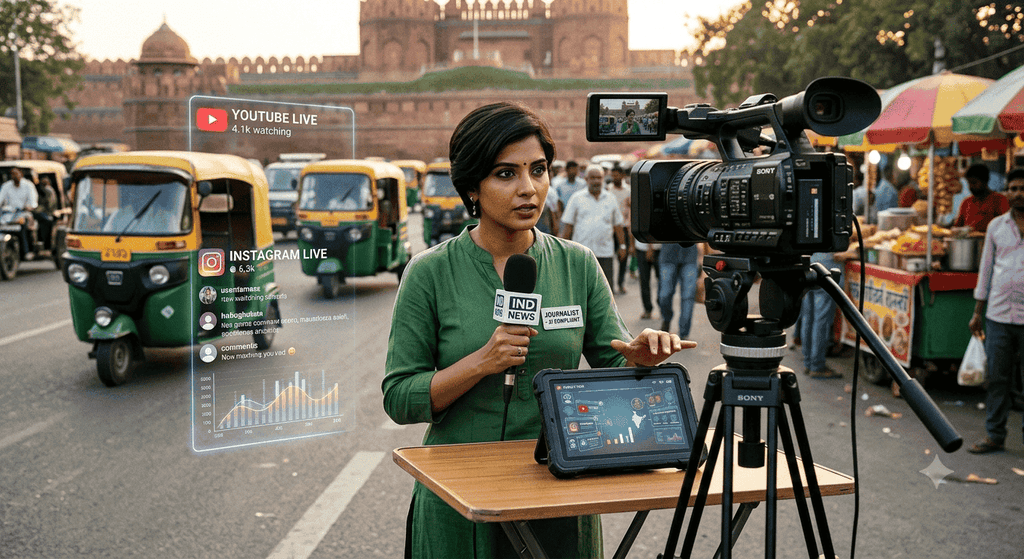
India’s New AI Content Rules 2026 have introduced important changes for social media platforms, content creators, and internet users. The government has updated the Information Technology Rules to control the misuse of artificial intelligence (AI), reduce deepfake videos, and make online content more transparent. These rules affect platforms such as YouTube, Instagram, Facebook, and other digital services.
The new rules came into effect on February 20, 2026. They require platforms to clearly identify permitted AI-generated content and take faster action against unlawful content. Understanding these rules is important for anyone who creates, uploads, or shares content online.
What Are India’s New AI Content Rules 2026?
India’s New AI Content Rules 2026 are amendments to the Information Technology (Intermediary Guidelines and Digital Media Ethics Code) Rules, 2021.
These amendments address content created or changed using artificial intelligence. The government aims to prevent people from using AI to create misleading videos, fake images, impersonation content, and other harmful material.
AI technology can now create realistic images, voices, and videos. Sometimes, viewers cannot easily identify whether the content is real or artificial. This can lead to confusion, fraud, and the spread of false information.
The updated rules aim to make AI content easier to identify and help platforms respond more quickly when unlawful content appears.
Why Has the Government Introduced New AI Rules?
Artificial intelligence is becoming a regular part of digital life. People use AI tools to make videos, write articles, edit pictures, create voiceovers, and design social media posts.
However, AI can also be misused.
Some people create fake videos of public figures, use another person’s voice without permission, or share misleading images. Such content can damage reputations and create problems for individuals.
The government has introduced these rules to address major concerns, including:
- Misleading AI-generated videos and images.
- Deepfakes that imitate real people.
- Fake audio recordings and voice impersonation.
- Non-consensual intimate images.
- Harmful content involving children.
- False information presented as real events.
- Online fraud and identity misuse.
The rules also place greater responsibility on digital platforms to identify and control unlawful content.
What Is AI-Generated Content?
AI-generated content is material created or altered with the help of artificial intelligence.
It may include images, videos, audio recordings, or other digital material.
For example, a person may use an AI tool to create a video of a person saying something they never actually said. Another person may generate a realistic image of an event that never happened.
Such content can appear genuine to viewers.
The rules focus on synthetic content that appears authentic and may be mistaken for a real person or event.
Not every use of AI is treated as harmful. Routine editing, quality improvements, and certain good-faith uses may fall outside the definition of regulated synthetic content.
https://www.qaskme.com/question-tag/ai/?
India’s New AI Content Rules 2026: Key Changes
The following are some of the important changes introduced under the amended IT Rules.
1. Clear Labels for AI-Generated Content
Platforms that allow AI-generated content must ensure that permitted synthetic content is clearly and prominently labelled.
These labels help users understand whether the content was generated or altered using AI.
For example, an AI-generated video may display a notice indicating that it contains synthetic material.
The rules also provide for traceable metadata or identifiers, where technically feasible. These identifiers can help platforms identify AI-generated material.
The purpose is to reduce confusion between real and artificial content.
2. Faster Removal of Unlawful Content
One of the major changes is the shorter deadline for removing unlawful content after a valid order or reasoned intimation from the appropriate government authority or court.
Under the amended rules, the deadline is three hours, compared with the earlier 36-hour timeline.
This change requires platforms to respond more quickly to unlawful content.
However, the three-hour requirement does not mean every AI-generated post must automatically be deleted. The action depends on the applicable rules and whether the content is unlawful.
3. Stronger Action Against Deepfake Videos
Deepfake content can use AI to make a person appear to say or do something that never happened.
Such videos may be used to mislead viewers, impersonate people, or damage someone’s reputation.
The amended rules require platforms to take steps to prevent unlawful synthetic content. This includes content involving impersonation, misleading material, and other prohibited uses.
4. Permanent AI Labels and Metadata
The rules require AI labels and related identifiers to remain attached to the content where applicable.
Platforms must not allow these markings to be removed or suppressed once applied.
This can make it easier for users and platforms to recognise synthetic material.
5. Greater Responsibility for Social Media Platforms
Platforms that enable users to create or share AI-generated content must take reasonable and appropriate technical measures.
They are expected to prevent unlawful content from being created or distributed through their services.
Platforms also have to inform users about the legal consequences of misusing AI.
How Will the New AI Rules Affect YouTube and Instagram?
YouTube and Instagram are popular platforms for videos, reels, and other digital content. The new rules may affect how creators upload and label certain types of AI-generated material.
Impact on YouTube Creators
YouTube creators often use AI tools for video editing, voiceovers, scripts, and visual effects.
Creators should carefully check whether their content contains realistic AI-generated or altered material that requires disclosure.
For example:
- A realistic AI-generated video showing a real person may require a clear label.
- A synthetic voice imitating another person may raise concerns if used deceptively.
- Fake news videos created using AI may violate applicable laws.
- Ordinary editing and quality improvements are not automatically unlawful.
Creators should avoid presenting artificial events as real incidents.
Impact on Instagram Users
Instagram users frequently share reels, images, stories, and edited videos.
Users should be careful when uploading realistic AI-generated content, particularly if it depicts real people or events.
Using AI to create a harmless design is different from creating a misleading image of another person.
Users should also avoid sharing AI-generated content that could harm someone’s privacy or reputation.
Impact on Facebook Users
Facebook users may also notice more attention to AI-generated images and videos.
The platform may need to identify synthetic material, display labels where required, and respond to unlawful content within the prescribed timelines.
Users should check the authenticity of viral videos before sharing them.
Do These Rules Apply to All AI Tools?
The rules are not limited to one AI application.
They concern intermediaries and digital platforms covered by the amended IT Rules. The framework can apply to services that enable the creation, publication, transmission, or sharing of synthetic content.
The specific obligations depend on the type of service and its role.
AI tools such as chatbots, image generators, and video generators may be affected by the applicable legal requirements. Users should also follow the terms and safety policies of the tools they use.
It is important to understand that the rules do not simply ban all AI tools or all AI-generated content.
What AI Content Is Not Allowed?
The amended framework requires platforms to prevent unlawful synthetic content.
Examples of harmful or unlawful content may include:
- AI-generated content used for impersonation or deception.
- Non-consensual intimate images.
- Content involving child sexual exploitation.
- Fake material that violates applicable laws.
- Misleading synthetic content that falsely portrays a real person or event.
Whether a particular post is unlawful depends on the facts and the relevant law.
Users should not assume that adding an AI label makes harmful content legal.
What Should Content Creators Do in 2026?
Content creators can continue using AI tools for many legitimate purposes. However, they should follow responsible practices.
Check AI Content Before Uploading
Before posting a video or image, check whether it realistically depicts a person or event that did not happen.
If disclosure is required, use the platform’s available AI-content label.
Do Not Impersonate Real People
Avoid creating realistic AI videos or audio that make another person appear to say or do something without permission, especially when the content could mislead viewers.
Verify Information Before Sharing
AI tools can produce incorrect information. Creators should verify important facts before publishing news, educational material, or public information.
Follow Platform Guidelines
YouTube, Instagram, Facebook, and other platforms may have their own policies for AI-generated content.
Creators should review those policies and follow the applicable disclosure requirements.
Respect Privacy
Do not use AI to create or share private, intimate, or harmful images of another person without consent.
How Can Users Identify AI-Generated Content?
AI-generated material can sometimes be difficult to identify. However, users can take a few practical steps.
- Look for AI-generated content labels on the platform.
- Check whether the video or image comes from a reliable source.
- Compare the claim with trusted news reports.
- Be cautious of unusual facial expressions, audio, or visual details.
- Avoid sharing content when its authenticity is uncertain.
- Check the source before believing a viral post.
These steps can help users avoid spreading misinformation.
India’s New AI Content Rules 2026: Important Points to Remember
| Rule | Important Detail |
|---|---|
| Rules amended | IT Rules, 2021 |
| Amendment notified | February 10, 2026 |
| Effective date | February 20, 2026 |
| AI content labels | Clear and prominent labels required where applicable |
| Metadata | Traceable identifiers required where technically feasible |
| Unlawful content removal | Three-hour timeline after valid government or court notice |
| Main objective | Reduce deepfakes and unlawful synthetic content |
| Platforms affected | Covered social media and digital intermediaries |
Frequently Asked Questions (FAQs)
1. What are India’s New AI Content Rules 2026?
India’s New AI Content Rules 2026 are amendments to the IT Rules, 2021. They introduce requirements for identifying permitted AI-generated content and preventing unlawful synthetic content.
2. When did the new AI content rules come into effect?
The amended rules came into effect on February 20, 2026.
3. Do YouTube and Instagram have to label AI content?
Platforms covered by the rules must ensure that permitted synthetic content is clearly and prominently labelled, as applicable.
4. Is all AI-generated content banned in India?
No. The rules do not ban all AI-generated content. They focus on transparency and preventing unlawful or harmful synthetic content.
5. What is the new content removal deadline?
The amended rules provide a three-hour deadline for covered platforms to remove unlawful content following a valid order or reasoned intimation from the appropriate government authority or court.
6. Can users create AI videos in India?
Users can create AI videos for legitimate purposes. They should follow applicable laws, platform policies, and disclosure requirements.
7. What is a deepfake?
A deepfake is synthetic media created or altered using AI to make a person appear to say or do something that may not have happened.
8. Can AI labels be removed from content?
The amended rules require platforms to prevent the removal or suppression of applicable AI labels and metadata once they have been applied.
Conclusion
India’s New AI Content Rules 2026 are an important step toward making digital platforms more transparent and accountable. The updated framework focuses on AI-generated content, deepfakes, unlawful material, and faster responses from platforms.
For content creators, the key is to use AI responsibly, disclose realistic synthetic content when required, and avoid misleading viewers. For ordinary internet users, checking the authenticity of viral images and videos is becoming increasingly important.
AI can be useful for education, creativity, and digital work. Following the rules can help people use this technology in a safer and more responsible way.
Official Information: Press Information Bureau – Government of India
Related News: The Times of India – India’s New AI Content Rules Explained
.