
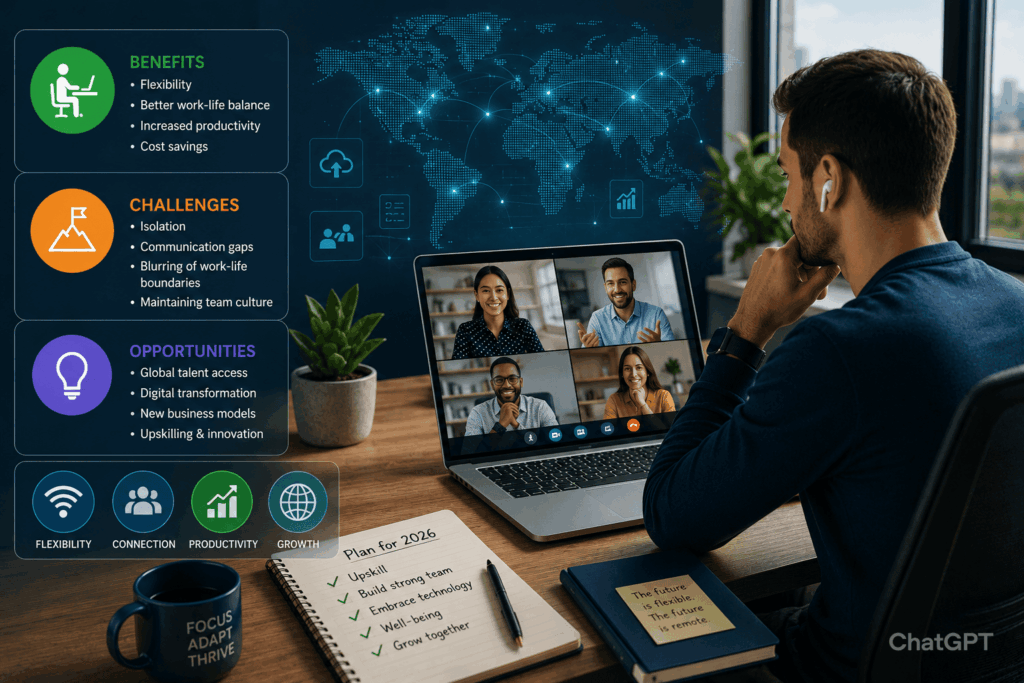
The Future of Remote Work continues to evolve rapidly in 2026, reshaping how organizations operate and how people build their careers. What began as a necessity for many businesses has transformed into a long-term workplace strategy that offers flexibility, productivity, and access to global talent. As technology advances and employee expectations change, remote work is becoming a defining feature of the modern economy.
Organizations of all sizes are investing in digital tools, cloud-based systems, and virtual collaboration platforms to support distributed teams. At the same time, professionals are seeking work environments that offer greater flexibility and work-life balance. Understanding the benefits, challenges, and opportunities associated with the future of remote work can help businesses and individuals thrive in this new era.
Understanding the Future of Remote Work in 2026
The workplace of 2026 looks significantly different from what it did just a few years ago. Hybrid models, remote-first organizations, and flexible scheduling have become increasingly common. Companies are no longer limited by geographical boundaries when hiring talent, and employees can often choose where they work best.
According to workplace research from organizations such as the World Economic Forum (https://www.weforum.org) and the International Labour Organization (https://www.ilo.org), flexible work arrangements continue to influence employment trends worldwide.
Several factors are driving the future of remote work:
- Improved digital communication tools
- Cloud-based infrastructure
- Increased employee demand for flexibility
- Growing acceptance of hybrid work models
- Expansion of global talent networks
- Advances in artificial intelligence and automation
These trends suggest that remote work is no longer a temporary solution but a permanent component of the modern workplace.
Benefits of the Future of Remote Work
Enhanced Work-Life Balance
One of the most significant advantages of remote work is improved work-life balance. Without lengthy commutes, employees gain additional time for family, personal development, health, and recreation.
Flexible schedules allow professionals to organize their work around their most productive hours, contributing to greater job satisfaction and reduced stress.
Increased Productivity
Contrary to early concerns, many studies indicate that remote workers often maintain or improve productivity levels. Fewer workplace distractions, personalized workspaces, and flexible scheduling contribute to enhanced focus and efficiency.
Businesses are increasingly measuring outcomes rather than hours spent in an office, leading to more performance-driven cultures.
Cost Savings for Employees and Employers
The future of remote work offers financial benefits for both organizations and workers.
Employees can save money on:
- Transportation
- Fuel
- Parking
- Work attire
- Daily meals
Employers may reduce expenses associated with:
- Office space
- Utilities
- Maintenance
- Equipment
- Real estate investments
These savings can be redirected toward innovation, employee development, and technological improvements.
Access to Global Talent
Remote work removes geographical limitations from recruitment. Organizations can hire skilled professionals from different regions and countries, creating diverse and inclusive teams.
This broader talent pool helps businesses find specialized expertise while offering opportunities to individuals regardless of location.
Challenges Facing the Future of Remote Work
Communication and Collaboration Barriers
Although technology has improved virtual communication, remote teams may still encounter misunderstandings and delays.
Without face-to-face interactions, maintaining strong communication requires intentional effort. Organizations must invest in reliable collaboration platforms and establish clear communication guidelines.
Popular collaboration tools include:
- Microsoft Teams
- Slack
- Zoom
- Google Workspace
You can learn more about workplace collaboration solutions at:
https://www.microsoft.com/microsoft-teams
https://slack.com
https://workspace.google.com
Employee Isolation and Mental Well-Being
Remote work can sometimes lead to feelings of isolation. Employees who work alone for extended periods may miss social interactions that naturally occur in traditional office environments.
Organizations must prioritize employee well-being by encouraging virtual social activities, regular check-ins, and access to mental health resources.
Creating opportunities for meaningful connection remains essential for long-term engagement.
Cybersecurity Risks
As remote work expands, cybersecurity concerns continue to grow. Employees often access company systems from multiple locations and devices, increasing potential security vulnerabilities.
Businesses must implement:
- Multi-factor authentication
- Secure VPN access
- Cybersecurity training
- Strong password policies
- Data protection protocols
The Cybersecurity and Infrastructure Security Agency offers valuable guidance:
https://www.cisa.gov
Managing Performance and Accountability
Leaders may face challenges when managing distributed teams. Traditional supervision methods become less effective in remote environments.
Successful remote organizations focus on:
- Clear goals
- Measurable outcomes
- Transparent expectations
- Regular feedback
- Trust-based management
Performance management systems are evolving to emphasize results rather than physical presence.
Opportunities Created by the Future of Remote Work
Growth of Digital Careers
https://www.qaskme.com/how-to-use-ai-to-boost-productivity-in-daily-life/
The future of remote work is creating new career opportunities across various industries. Digital marketing, software development, content creation, data analysis, customer support, and cybersecurity continue to experience strong demand.
Professionals who develop digital skills can access a broader range of employment opportunities than ever before.
Expansion of Freelancing and Entrepreneurship
Remote work technology enables individuals to launch businesses and work independently from virtually anywhere.
Freelancers can serve clients globally while entrepreneurs can build distributed teams without investing heavily in physical office space.
The rise of digital platforms has made it easier to connect talent with opportunities across international markets.
Increased Workplace Inclusion
Remote work can help create more inclusive workplaces by providing opportunities for individuals who may face barriers to traditional office employment.
Flexible work arrangements can support:
- Parents and caregivers
- Individuals with disabilities
- Rural communities
- International professionals
- Lifelong learners
Organizations that embrace inclusive hiring practices often benefit from diverse perspectives and innovative thinking.
Artificial Intelligence and Remote Work
Artificial intelligence is becoming a powerful force in the future of remote work. AI-powered tools assist with scheduling, project management, communication, customer service, and data analysis.
Organizations are increasingly using AI to:
- Automate repetitive tasks
- Improve workflow efficiency
- Enhance decision-making
- Support employee productivity
Information about AI developments can be found at:
https://www.openai.com
How Businesses Can Prepare for the Future of Remote Work
Invest in Technology
Reliable technology remains the foundation of successful remote operations. Businesses should prioritize secure infrastructure, cloud services, and collaboration platforms.
Build a Strong Remote Culture
Culture does not disappear in remote environments—it simply requires different strategies.
Organizations should focus on:
- Transparent communication
- Employee recognition
- Team-building initiatives
- Professional development
- Leadership accessibility
Provide Ongoing Training
Continuous learning helps employees adapt to changing technologies and workplace expectations.
Training areas may include:
- Digital collaboration
- Cybersecurity awareness
- Leadership development
- Project management
- AI literacy
Prioritize Employee Well-Being
Employee wellness programs, flexible schedules, and mental health support contribute to sustainable remote work environments.
Organizations that prioritize well-being often experience stronger retention and higher employee satisfaction.
The Future of Remote Work Beyond 2026
Looking beyond 2026, remote work is expected to become even more sophisticated through advances in artificial intelligence, virtual reality, and digital collaboration technologies. Hybrid work arrangements will likely remain common as organizations seek to balance flexibility with in-person interaction.
The future workplace may include immersive virtual offices, AI-powered productivity assistants, and increasingly global teams working seamlessly across borders.
While challenges such as cybersecurity, communication, and employee engagement will continue to require attention, the opportunities created by remote work far outweigh the obstacles for many organizations.
Conclusion
The Future of Remote Work represents one of the most significant workplace transformations of the modern era. In 2026, businesses and professionals are benefiting from greater flexibility, access to global talent, increased productivity, and innovative digital tools. At the same time, challenges related to communication, well-being, and cybersecurity require thoughtful solutions.
Organizations that embrace adaptability, invest in technology, and prioritize people-centered work cultures will be best positioned for success. As remote work continues to evolve, it offers tremendous opportunities to create more inclusive, efficient, and resilient workplaces for the future.